
 Back
Back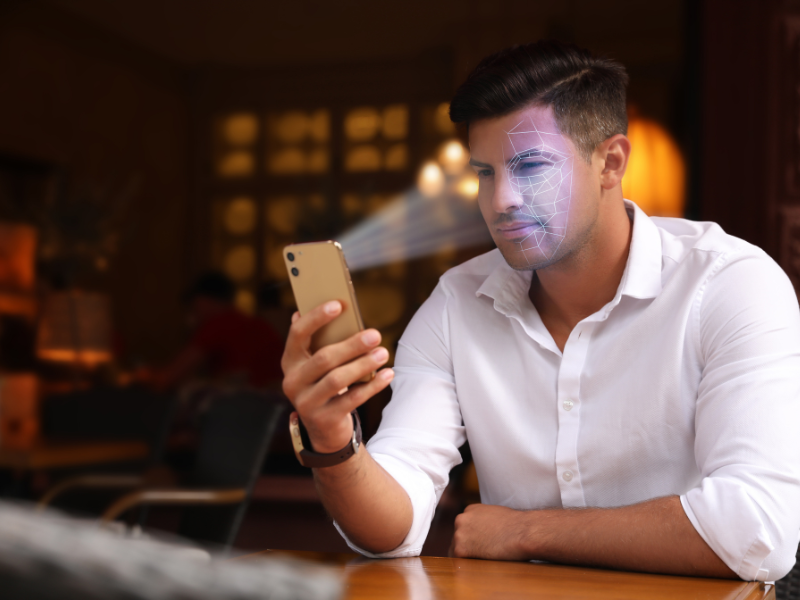
Facial recognition software has moved from novelty to everyday utility. We unlock phones with a glance, airports move travelers through security faster, and stadiums can identify VIPs in seconds. These experiences are powered by systems that can detect a face, turn it into a mathematical representation, and match it against a known template at remarkable speed.
This guide explains how facial recognition software works, where it is used, what benefits and risks it creates, and how privacy-preserving engineering is reshaping the conversation. It builds on your original draft and adds practical context so readers understand the technology and what responsible adoption looks like today.
Key Takeaways
- Facial recognition software uses computer vision and machine learning to identify or verify faces in images and videos.
- Adoption spans airports, healthcare, retail, device security, and smart venues.
- Privacy, consent, transparency, and bias mitigation are essential to public trust.
- On-device, privacy-first designs reduce risk while improving speed and reliability.
- Future progress will focus on accuracy, fairness, and user control over data.
How Facial Recognition Software Works
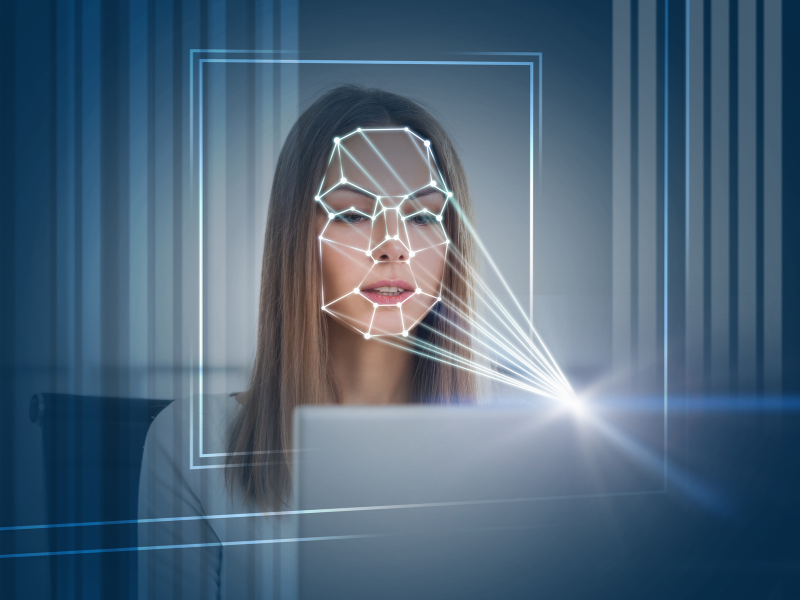
Facial recognition is a pipeline of computer vision tasks. First the system detects a face in an image or video frame. Classical methods relied on Haar features and cascades; modern systems use deep learning to locate faces robustly across lighting conditions, pose, or partial occlusion.
Once a face is detected, the system normalizes the image and extracts a set of features that capture the face’s structure. Distances between landmarks such as eyes, nose, and mouth are encoded into a compact numerical vector known as an embedding. This representation acts like a fingerprint for the face without storing the raw image.
Verification compares one embedding to another to answer the question: are these the same person. Identification compares one embedding to many to find the closest match in a gallery. Performance depends on model quality, image quality, and how well the embedding space separates identities across ages, expressions, and environments.
PrivateID’s facial recognition executes this entire pipeline on the user’s device. The match happens in about 25 milliseconds, and because the processing occurs locally, no images or personal data are transmitted or stored outside the user’s device. This edge approach reduces latency and minimizes exposure to privacy and compliance risks.
Recent Advances That Changed the Field
Deep learning, especially convolutional neural networks, improved detection and recognition accuracy. Training on large, diverse datasets helped models handle lighting changes, camera angles, and facial expressions. Edge hardware and mobile GPUs made it practical to run sophisticated models on phones, tablets, and kiosks in real time.
Another important advance is privacy-preserving computation. PrivateID uses homomorphic tokens and an edge architecture, so only anonymized mathematical representations are created and handled. Nothing leaves the device, which makes it simpler to comply with frameworks like the European Commission’s guidance on the GDPR while still delivering a fast user experience. The NIST Digital Identity Guidelines encourage data minimization and layered assurance, both of which align with on-device verification.
Core Applications and Real-World Use Cases
Facial recognition shows up across the customer journey and across physical and digital spaces. Below are common scenarios and the practical value they deliver.
Security and Law Enforcement
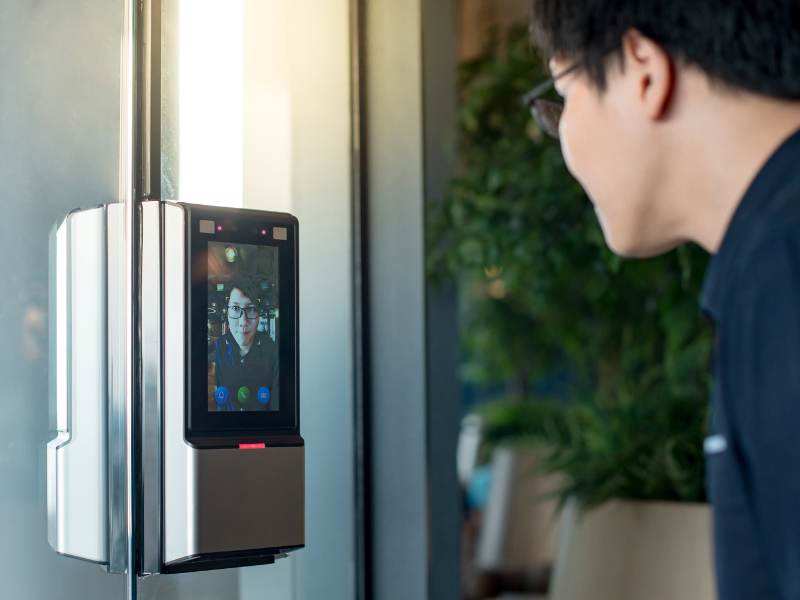
Border control and airport programs use facial matching for check-in, bag drop, and immigration, which reduces queues and fraud. Investigative teams can compare faces from surveillance video against watchlists under strict legal controls. Responsible adoption requires safeguards, auditability, and clear limits on scope and retention. For continuous video contexts, PrivateID’s MediaSafe technology provides facial tracking and deepfake detection that runs in the stream, helping operators flag synthetic content before it causes harm. See the overview on deepfake detection.
Personal Device Security and Sign-In
Face-based login on phones and laptops replaces passwords with a quick, contactless step. PrivateID’s FIDO2 Ultrapass product applies on-device verification for passwordless sign-in and authorization flows, pairing convenience with strong assurance. The security model avoids centralized biometric databases, which are high-value targets for attackers.
Retail and Customer Experience
Retailers use face analytics to prevent repeat theft, measure dwell time, and personalize service. When insights are computed locally and only anonymized patterns are retained, teams gain operational value without collecting personally identifiable information. This privacy-preserving pattern is essential for long-term trust with customers and regulators.
Healthcare and Public Access
Hospitals and clinics need to ensure the right person is matched to the right record. Facial verification can support patient identification and controlled access to medications or restricted areas. Public venues use it to manage ticketing and entry with less contact, which improves throughput and hygiene during busy events.
Privacy and Ethical Considerations
Readers want clear guidance on how to use the technology responsibly. Four themes matter most.
Consent and Transparency
Biometric data is inherently sensitive. Regulations restrict how it can be collected, used, and shared. Clear user notices and opt-in consent build trust. Data minimization reduces the amount of information collected in the first place. The European Commission’s GDPR overview explains core principles such as purpose limitation and storage limitation, which map well to on-device processing.
Algorithmic Bias and Fairness
If training data underrepresents certain demographics, the model may perform unevenly across groups. Responsible teams test for disparate performance, re-balance training sources, and monitor production metrics. PrivateID trains models with ethically sourced synthetic data so that no real faces are harvested during development. This helps reduce bias while preserving privacy.
Data Protection by Design
Privacy-by-design means the system avoids collecting raw images or templates whenever possible. PrivateID’s architecture performs recognition, liveness checks, and age estimation locally. It creates only anonymized mathematical tokens, not image archives. If an attacker cannot access stored images, the risk profile changes dramatically.
Governance and Scope Control
Even accurate systems can be misused if policy is weak. Organizations should define use cases, set strict retention limits, implement human oversight for sensitive decisions, and maintain an audit trail. Public communication about what the system does and does not do improves social legitimacy and reduces fear.
Benefits and Limitations to Weigh
Any identity technology involves tradeoffs. Setting expectations helps reduce friction and backlash.
Benefits
- Speed improves user experience and security outcomes by shortening the time between challenge and decision.
- Convenience eliminates passwords, badges, and manual checks that slow people down.
- Accuracy reduces impersonation and account takeover when paired with liveness detection.
- Contactless flows improve hygiene and throughput in healthcare and public spaces.
Limitations
- Image quality affects performance. Low light, motion blur, and camera placement can reduce accuracy.
- Privacy risk increases when systems centralize image storage in the cloud. On-device processing mitigates this.
- Algorithmic bias must be monitored continually through audits and representative testing.
- Potential misuse remains a valid concern. Governance, transparency, and scope control are critical.
Liveness Detection and Deepfake Defense
A modern facial recognition stack pairs matching with checks that confirm a real person is present. Liveness detection looks for signals that distinguish a live face from a printed photo, a replayed video, or a digital mask. Adding liveness makes it harder for attackers to spoof the system and is fast enough to keep the experience smooth.
Deepfake detection matters whenever images or video might be synthetic. Generative tools can create convincing faces, swap identities, or alter speech. PrivateID’s MediaSafe feature set analyzes frames on the device or in the stream to flag manipulation while protecting privacy. If a system can detect a deepfake before it is accepted, the rest of the workflow stays trustworthy. Read more on liveness detection and deepfake detection.
Compliance and Global Standards
Facial recognition touches identity, privacy, and safety regulations. Design choices should make compliance simpler rather than harder.
The NIST Digital Identity Guidelines describe assurance levels and good practice for identity proofing and authentication. Aligning with these principles helps teams document why their controls are appropriate. The GDPR emphasizes data minimization and security by design. On-device computation supports both, because images never leave the device and are not stored server-side.
For readers who want to clarify the difference between preventing breaches and protecting personal data, the PrivateID article on Privacy vs Security offers a helpful model. Security controls can stop intrusions, but privacy controls determine what sensitive data exists to be stolen in the first place.
Future Trends and What to Expect Next
Three developments will define the next wave of adoption.
Accuracy and Robustness in the Wild
Models will improve at handling masks, occlusions, motion, and low light. Better pre-processing and training on diverse scenes will reduce failure cases. Expect fewer false rejections and a smoother experience on everyday cameras.
Privacy-Enhancing Computation
Edge AI, encrypted representations, and local decisioning will become the norm. Organizations will prefer systems that eliminate central biometric databases and pass audits without complex exemptions. This shift reduces legal exposure and builds public confidence.
Integrated Identity Assurance
Facial recognition will operate alongside age estimation, liveness, document verification, and risk scoring. The result is an adaptive trust framework that can step up or step down friction based on context. PrivateID already supports this pattern with on-device modules that plug into a single flow without exporting images.
Conclusion
Facial recognition software is changing how people access devices, services, and spaces. The promise is clear: faster sign-ins, safer transactions, and more personalized experiences. The responsibility is also clear: treat biometric data with care, minimize what is collected, and design systems that respect user autonomy.
PrivateID demonstrates that high performance and strong privacy can coexist. With on-device verification that completes in about 25 milliseconds, and with liveness and deepfake defenses running locally, organizations can reduce risk while improving experience. The future belongs to solutions that are fast, private, and accountable by design.
Frequently Asked Questions About Facial Recognition Software
What is facial recognition software and how does it work
It detects a face, converts it into a numerical embedding, and compares that representation against stored templates for verification or identification. Modern systems use deep learning to handle changes in lighting, pose, and expression.
What are the main benefits of using facial recognition software
It provides fast sign-in, reduces fraud, and enables contactless access across devices, facilities, and online accounts. Pairing recognition with liveness detection further improves security outcomes.
Where is facial recognition software commonly used today
Airports, law enforcement, retail, healthcare, corporate offices, and consumer electronics use it for faster processing, identity checks, and secure access.
What are the privacy and ethical concerns
Key issues include consent, data retention, algorithmic bias, and potential misuse for surveillance. Privacy-by-design mitigations include on-device processing, anonymized tokens, and transparent policy.
How accurate is facial recognition in real conditions
Accuracy depends on camera quality, lighting, motion, and model training. High-quality systems deliver strong results, and edge processing reduces latency so decisions happen in real time.
Is facial recognition legal everywhere
Rules vary by region. Many jurisdictions allow commercial use with clear consent and privacy controls, while some cities restrict government use. Organizations should align to frameworks like GDPR and documented industry standards.