
 Back
Back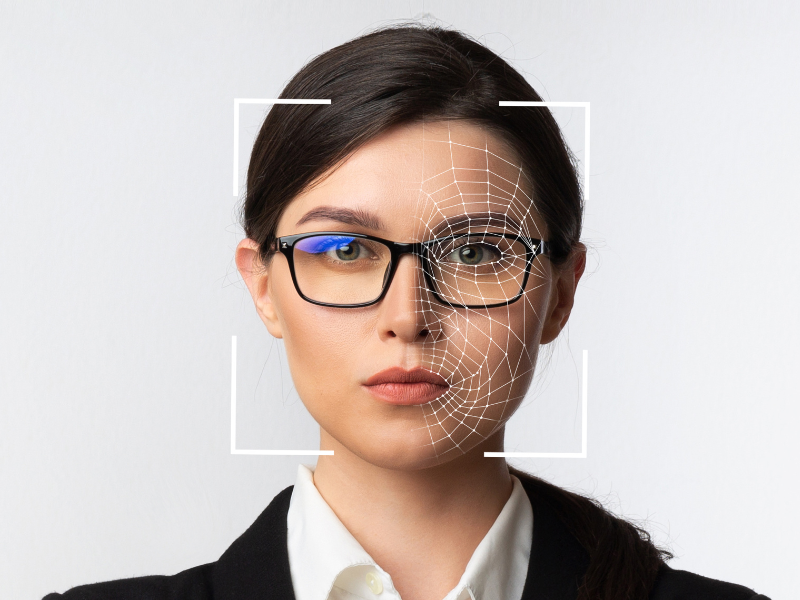
Biometric authentication has become part of everyday life. We unlock our phones with a glance, verify payments with a quick face scan, and check in at airports without handing over a boarding pass. But none of this would be possible—or secure—without one essential safeguard: liveness detection.
Even the most advanced facial or fingerprint recognition system can be fooled by a fake image or AI-generated clone if it cannot tell whether a real human is present. As deepfake technology and digital spoofing evolve, the security industry faces a new challenge: ensuring that identity verification remains not just accurate, but alive.
This guide explores what liveness detection is, why it matters, how it works, and how privacy-preserving platforms like PrivateID are shaping its future.
Key Takeaways
- Liveness detection verifies that biometric input comes from a live person, not a spoof.
- Active and passive methods balance accuracy, convenience, and compliance.
- Layered techniques—texture, depth, motion, and vital-sign analysis—deliver robust protection.
- Applications span banking, healthcare, retail, border control, and the workplace.
- Privacy-preserving, on-device AI like PrivateID’s Edge technology ensures speed, accuracy, and complete data ownership.
What Is Liveness Detection
Liveness detection uses algorithms, sensors, and AI models to confirm that a biometric sample—such as a face, fingerprint, or voice—comes from a live human being rather than a static image, replayed video, or mask. When you unlock your phone or access a secure system, it silently looks for tell-tale signs of life: eye movement, skin texture, heat, depth, or tiny micro-expressions.
It’s not a small detail. Without liveness checks, a printed photo, 3D mask, or deepfake could pass as a legitimate user. The entire premise of biometric authentication depends on knowing the difference between a recording and a real person.
Why Liveness Detection Matters in Modern Security
Biometrics changed authentication forever—but they also introduced new attack surfaces. Cybercriminals now use 3D-printed fingerprints, silicone masks, and AI-generated faces to impersonate victims. These spoofing attempts are cheap, fast, and disturbingly convincing.
That’s why liveness detection has become non-negotiable. It adds a verification layer that distinguishes the living from the synthetic, blocking fraudulent access even when the biometric data itself is stolen or replicated.
A well-designed liveness system provides:
- Fraud prevention: Eliminates impersonation attempts across financial, healthcare, and government workflows.
- Privacy protection: Reduces the need to store raw biometric data by validating users locally.
- User confidence: Builds trust that their digital identity cannot be hijacked by an AI-generated replica.
- Compliance readiness: Meets privacy frameworks like GDPR, CCPA, and emerging AI governance laws.
Consider the difference in user experience: a traditional cloud-based face scan sends data to a remote server, increasing exposure risk. By contrast, PrivateID’s on-device AI verifies liveness within 25 milliseconds, never transmitting or storing an image. This approach eliminates centralized biometric databases—often the target of breaches—and aligns with the NIST Digital Identity Guidelines, which advocate privacy-by-design.
For organizations, liveness detection isn’t just security—it’s brand protection. A single spoofed account can trigger regulatory fines, reputational harm, and loss of consumer trust. A frictionless, real-time verification process restores confidence for both users and auditors.
Core Methods of Liveness Detection
Active and Passive Detection
Active liveness detection requires interaction. Users may be prompted to blink, smile, or follow on-screen movement cues. The software then evaluates these organic micro-motions to confirm authenticity. It offers high reliability but can feel slightly intrusive.
Passive liveness detection runs silently in the background, analyzing skin texture, depth, or spontaneous movements. It requires no action from the user and suits mobile apps or remote onboarding experiences.
PrivateID’s platform supports both, giving developers flexibility to balance assurance and convenience across use cases.
Leading Techniques Used in Liveness Detection
- Texture and Reflection Analysis – Evaluates light diffusion and moisture on real skin versus artificial surfaces.
- Depth Sensing – Uses infrared or 3D mapping to differentiate flat screens from real contours.
- Micro-Expression Tracking – Detects involuntary blinks, pupil movement, and subtle facial twitches.
- Challenge-Response Tests – Prompts timed gestures or spoken phrases, which static media can’t mimic.
- Vital-Sign Monitoring – Reads micro color changes caused by heartbeat or blood flow for biological proof.
The strongest systems combine several techniques. PrivateID’s MediaSafe™ engine extends this further by analyzing facial patterns in video streams to flag deepfakes or injected synthetic faces while maintaining complete on-device privacy.
Challenges and Limitations in Liveness Detection
Liveness detection continues to evolve—and so do its adversaries.
- Hyper-realistic spoofs: Silicone masks and neural-rendered videos can deceive weak algorithms.
- Environmental variability: Poor lighting, low-quality cameras, or face coverings can reduce accuracy.
- False rejections: Users with disabilities or unique facial traits sometimes trigger errors.
- Data exposure: Systems that upload biometrics to the cloud risk breaches and regulatory violations.
PrivateID’s Edge AI mitigates these issues by processing data locally with homomorphic tokens. Since no image or personally identifiable information ever leaves the device, privacy risks and legal exposure are dramatically reduced.
True resilience comes from combining accuracy with user experience. A system that’s perfectly secure but frustrating to use will fail in real-world deployment. Edge-based verification gives both—real-time authentication with near-zero friction.

Applications Across Industries
Banking and Finance
Financial institutions use liveness detection to secure mobile logins, remote account openings, and high-value transactions. It blocks account-takeover attempts driven by stolen biometrics and meets KYC/AML compliance requirements. Edge verification also improves approval rates by reducing manual review delays.
Healthcare
Hospitals employ liveness detection to confirm patient identities before granting access to electronic health records or prescription systems. It prevents insider fraud, supports HIPAA compliance, and enables password-free authentication for staff moving between secure workstations.
Government and Border Control
E-passports, visa kiosks, and airport gates rely on liveness detection to prevent impersonation. Governments increasingly require technologies certified to standards such as NIST 800-63 AAL2, achieved by PrivateID’s FIDO2 Ultrapass™. Real-time verification streamlines border crossings while keeping personal data under user control.
Retail and E-Commerce
Retailers integrate face and voice authentication for loyalty programs, checkouts, and fraud prevention. Liveness checks ensure that transactions originate from real customers, not bots or replayed credentials, improving trust at every digital touchpoint.
Workplace Security
Organizations apply liveness verification for physical access control, remote workforce management, and privileged account logins. PrivateID’s SDKs enable instant deployment across web and mobile environments with minimal development overhead.
Across every sector, liveness detection transforms static identity checks into continuous, trustworthy authentication.
Emerging Trends in Liveness Detection Technology
Smarter AI and Adaptive Learning
Next-generation algorithms use self-training models that adapt to new attack vectors in real time. They can learn the difference between normal human movement and AI-generated mimicry, reducing false negatives while maintaining accuracy. Combined with synthetic training data, these systems anticipate threats before they reach production.
Multi-Modal Biometrics
Future authentication will integrate multiple signals—facial, voice, iris, and behavioral biometrics—to build comprehensive trust profiles. When one signal is uncertain, another confirms identity. PrivateID’s modular platform already supports these combined modalities across its privacy-preserving SDK suite.
Privacy-Enhancing Computation
Data minimization is becoming central to digital identity. Edge AI, federated learning, and encrypted matching now let models verify identities without ever collecting raw data. PrivateID’s on-device framework achieves this in milliseconds, aligning with both GDPR and the European Commission’s Data Protection Principles.
This architectural shift—from central storage to local computation—marks the single biggest leap in digital identity security since public-key cryptography.
Integration with AR and VR
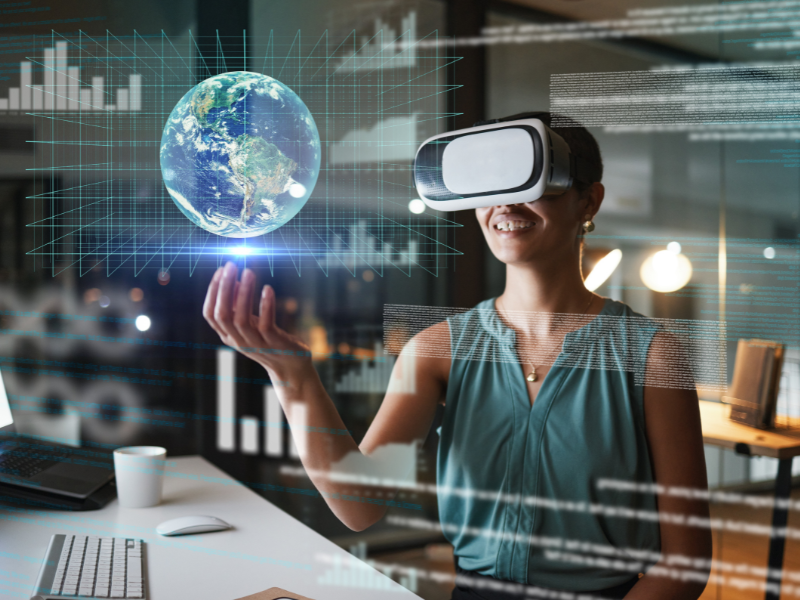
As virtual and augmented reality expand into enterprise collaboration and e-commerce, verifying digital presence becomes crucial. Liveness detection ensures that avatars or digital twins represent real, authenticated users. PrivateID’s MediaSafe™ operates inside video streams to detect deepfakes in immersive environments, securing tomorrow’s metaverse interactions.
AI Governance and Global Policy Alignment
Governments are drafting AI accountability laws requiring explainability and audit trails for biometric systems. Organizations that deploy transparent, privacy-first architectures—like PrivateID’s homomorphic edge processing—will meet future mandates faster and avoid costly retrofits.
Compliance and Ethical Governance
Liveness detection doesn’t exist in a vacuum—it sits at the intersection of security, ethics, and law. Responsible deployment demands:
- Transparency: Users must understand what data is collected and how it’s used.
- Auditability: Regular testing for accuracy, bias, and demographic fairness.
- Retention control: Clear data deletion and lifecycle management.
- Ethical AI: Training on synthetic, privacy-exempt datasets to prevent exploitation.
PrivateID implements all four pillars. Its systems use synthetic facial data to eliminate bias while maintaining accuracy, and its privacy-by-design framework ensures compliance in over 195 countries. The World Economic Forum’s Digital Trust Report reinforces that these governance models are essential for sustaining public confidence in biometric identity systems.
For further insight, explore PrivateID’s Deepfake Detection and Facial Recognition Software platforms—both built on the same ethical AI foundation.
The Road Ahead
In the coming years, liveness detection will fade into the background of user experience—instant, adaptive, and invisible. Verification will happen in under a second, powered by contextual signals from devices and environments.
PrivateID already represents that future. Its real-time edge processing verifies user presence in just 25 milliseconds, combining liveness, deepfake defense, and face matching into a single privacy-preserving workflow. By eliminating central databases and replacing them with encrypted on-device computation, PrivateID allows global organizations to authenticate securely without ever collecting personal data.
The mission is simple: build authentication that protects people first and scales ethically for the entire digital ecosystem.
Conclusion
Liveness detection is no longer optional—it’s the foundation of digital trust. It ensures that every biometric transaction originates from a living, consenting human being and that personal data stays private.
PrivateID’s innovation proves that performance and privacy can coexist. By merging speed, accuracy, and regulatory compliance, it sets a new benchmark for responsible identity verification.
The next era of authentication will not rely on passwords or cloud databases—it will rely on intelligence at the edge, verifying life itself.
Frequently Asked Questions About Liveness Detection
What is liveness detection in biometric authentication
It’s the process of verifying that a biometric input comes from a real, live person instead of a spoofed image or recording. Without it, biometrics can be fooled by deepfakes or replicas.
How does liveness detection stop spoofing attacks
It examines depth, texture, motion, and micro-movements to detect forgeries. With edge-based AI, detection happens locally in milliseconds, keeping biometric data private.
What types of liveness detection exist
Active detection requires small user actions, like blinking or turning the head. Passive detection analyzes natural human cues automatically.
Why is liveness detection critical for digital security
It prevents fraud, identity theft, and deepfake abuse, ensuring authentication systems remain both safe and user-friendly.
Can liveness detection be fooled
Advanced spoofs occasionally challenge weaker models, but layered defenses and adaptive AI—like those in PrivateID’s system—make successful attacks exceedingly rare.
How is liveness detection evolving
It’s becoming faster, fairer, and more private through synthetic training data, multi-modal biometrics, and on-device AI that completes verification within milliseconds.