
 Back
Back
Biometric authentication has moved from novelty to necessity. What once felt futuristic is now embedded in everyday life, from unlocking smartphones to authorizing financial transactions and securing sensitive systems. As digital interactions accelerate and traditional passwords prove increasingly fragile, biometric authentication offers a more resilient path forward. By relying on unique biological and behavioral traits, it reshapes how trust and access are established in modern security environments.
Understanding how biometric authentication works, where it excels, and where it requires careful implementation is essential for organizations and individuals navigating today’s threat landscape. This guide explores the technology, its benefits, its limitations, and where biometric authentication is headed next.
Key Takeaways
- Biometric authentication uses unique physiological and behavioral traits to verify identity securely and efficiently.
- Common methods include fingerprints, facial recognition, iris scanning, voice recognition, and behavioral biometrics.
- Biometric systems improve security and user experience but must address spoofing, accuracy, and privacy risks.
- Protecting biometric data through encryption and privacy focused design is critical.
- Future developments emphasize continuous authentication, AI driven improvements, and stronger privacy safeguards.
Understanding Biometric Authentication
Biometric authentication is the process of verifying identity using characteristics intrinsic to an individual rather than knowledge or possessions. Unlike passwords, PINs, or access cards, biometric traits cannot be easily forgotten, shared, or reused across systems.
Physiological biometrics such as fingerprints or facial features rely on stable physical characteristics. Behavioral biometrics, such as typing patterns or movement, analyze how a person interacts with devices and environments. Together, these methods provide a powerful alternative to traditional authentication approaches that are increasingly vulnerable to phishing, credential stuffing, and data breaches.
As organizations seek both stronger security and smoother user experiences, biometric authentication fills a critical gap. It allows access decisions to be made quickly and confidently, without placing the burden of password management on users.
Modern biometric authentication platforms, such as PrivateID, are increasingly designed around privacy-preserving architectures. Rather than transmitting or storing biometric images centrally, PrivateID processes biometric data entirely on the user’s device, ensuring that no facial images or biometric templates ever leave the device. This approach significantly reduces breach risk while aligning with global privacy regulations and emerging best practices for biometric security.
Types of Biometric Authentication Methods
Biometric authentication methods fall into two broad categories, each serving different security and usability needs.
Physiological Biometrics
Physiological biometrics are based on measurable physical traits that remain relatively stable over time.
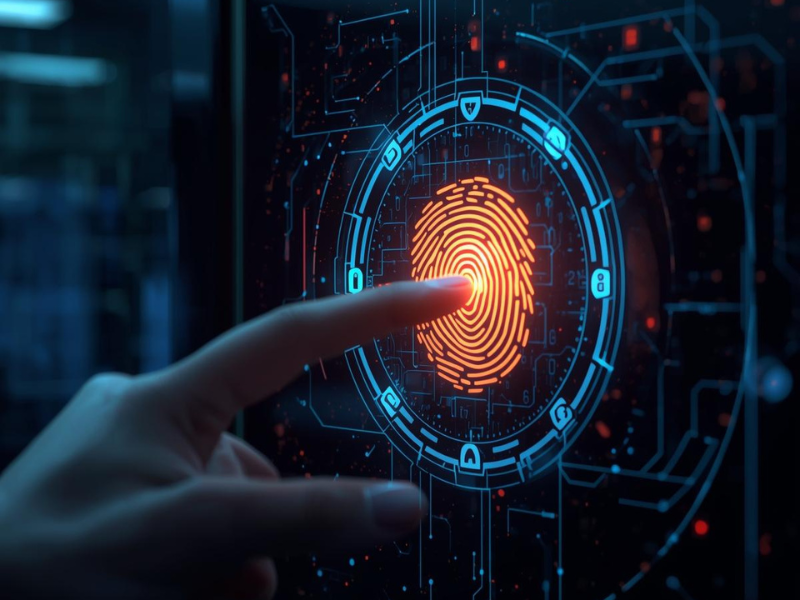
- Fingerprint recognition remains one of the most widely deployed biometric methods due to its balance of accuracy, cost, and ease of use.
- Facial recognition enables contactless authentication by analyzing facial structure and features using cameras and algorithms.
- Iris and retinal scanning offer extremely high accuracy by examining unique patterns in the eye, often reserved for high security environments.
- Voice recognition identifies individuals by vocal characteristics and is commonly used in call centers and remote verification.
- Hand geometry and vein recognition provide alternatives in environments where fingerprints or facial scans are impractical.
These methods are often combined to improve reliability and reduce the risk of false matches.
Behavioral Biometrics
- Behavioral biometrics focus on how a person behaves rather than how they look.
- Keystroke dynamics analyze typing rhythm, speed, and pressure to create a behavioral profile.
- Gait analysis evaluates walking patterns and movement.
- Mouse movement and touchscreen behavior are used silently in the background to identify anomalies.
- Signature recognition remains relevant in certain regulated industries.
Behavioral biometrics are particularly valuable for continuous authentication, monitoring activity after initial login to detect suspicious behavior.
How Biometric Authentication Works
Behind the simplicity of biometric authentication lies a structured and highly technical process.
Enrollment and Verification
The process begins with enrollment. A biometric sample is captured and converted into a digital template using specialized algorithms. This template represents key features rather than raw biometric data and is stored securely, often encrypted or kept locally on a device.
During verification, a new biometric sample is captured and compared to the stored template. If the similarity score meets a predefined threshold, access is granted. This threshold must be carefully calibrated to balance security and usability, minimizing both false acceptances and false rejections.
Modern systems often supplement biometric matching with additional signals such as device trust, environmental factors, or contextual risk scoring. For example, PrivateID’s on-device biometric authentication performs identity confirmation in approximately 25 milliseconds, demonstrating how speed and privacy can coexist without compromising security.
Benefits of Biometric Authentication
The rapid adoption of biometric authentication is driven by several compelling advantages.
- Security is significantly enhanced because biometric traits are difficult to replicate or steal at scale.
- User convenience improves as authentication becomes faster and more intuitive.
- User experience benefits from reduced friction and fewer interruptions during login or verification.
- Fraud prevention strengthens when access is tied directly to an individual rather than shared credentials.
- Scalability allows biometric systems to be deployed across millions of users and devices with consistent performance.
These benefits make biometric authentication particularly attractive in banking, healthcare, government services, and enterprise environments.
Challenges and Limitations of Biometric Systems
Despite its strengths, biometric authentication is not without challenges.
Spoofing and Attack Vectors
Attackers have demonstrated methods such as fake fingerprints, high resolution understanding of facial recognition systems, and voice deepfakes. To counter this, many platforms incorporate liveness detection to verify that a real person is present during authentication.
Accuracy and Environmental Factors
Biometric performance can be affected by lighting conditions, camera quality, physical injury, aging, or background noise. Systems must be designed to handle real world variability without penalizing legitimate users.
Device and Infrastructure Dependency
Not all devices support the same biometric sensors, which can limit universal adoption. Organizations must plan for fallback authentication methods to ensure accessibility.
Addressing these challenges requires continuous model updates, testing, and thoughtful system design.
Privacy and Security Considerations
Biometric data is inherently sensitive. Unlike passwords, biometric traits cannot be replaced if compromised.
- Strong encryption and access controls are essential to protect biometric templates.
- Decentralized or on device processing reduces exposure by avoiding centralized biometric databases.
- Clear data retention policies and transparency help maintain user trust.
- Compliance with privacy regulations such as GDPR and CCPA is mandatory in many regions.
- Layering biometric authentication with additional security measures, such as device trust or contextual verification, further reduces risk.
Platforms that eliminate centralized biometric storage reduce regulatory exposure and long-term risk. PrivateID’s architecture avoids transmitting or storing biometric data entirely, helping organizations meet requirements under GDPR, CCPA, BIPA, and healthcare or financial regulations without introducing new attack surfaces.

Future Trends in Biometric Authentication
Biometric authentication continues to evolve alongside advances in artificial intelligence and privacy technology.
- Continuous authentication will monitor behavior throughout a session rather than relying on a single login event.
- Wearable and embedded sensors will extend biometric authentication beyond phones and laptops.
- AI driven models will improve accuracy while adapting to new attack techniques.
- Privacy preserving approaches such as on device processing and user controlled credentials will become standard.
- Global standardization efforts will improve interoperability across borders and industries.
These developments point toward biometric systems that are both more secure and more respectful of individual privacy.
Conclusion
Biometric authentication has become a cornerstone of modern digital security. By replacing fragile credentials with identity based verification, it enables stronger protection and smoother experiences across countless use cases. Its success, however, depends on careful implementation, continuous improvement, and an unwavering commitment to privacy.
As organizations embrace biometric authentication, the goal should not be convenience alone, but trust. When designed responsibly, biometric systems help create a digital environment where access is secure, friction is minimized, and users remain in control.
Frequently Asked Questions About Biometric Authentication
What is biometric authentication and how does it work?
Biometric authentication is a security process that verifies identity using unique biological or behavioral traits, such as fingerprints or facial structure. It involves capturing a biometric sample, generating a digital template, and comparing it with a stored record to grant or deny access.
What are common types of biometric authentication methods?
The main types of biometric authentication include physiological methods (fingerprint, facial recognition, iris scans) and behavioral methods (keystroke dynamics, gait analysis). Each has distinct applications and strengths in enhancing security and user experience.
What are the main benefits of using biometric authentication?
Biometric authentication offers enhanced security, unmatched convenience, improved user experience, and reduced fraud. As these methods are tied to unique characteristics, they make unauthorized access and identity theft much more difficult compared to traditional authentication methods.
Are there any privacy risks with biometric authentication systems?
Yes, biometric data is highly sensitive. If compromised, it cannot be replaced like a password. Organizations must secure biometric templates with strong encryption, limit access, and comply with privacy laws to protect user data and maintain public trust.
How is biometric authentication evolving in the future?
Biometric authentication is advancing with continuous authentication, wearable sensors, and artificial intelligence integration. Future trends focus on privacy-first approaches, on-device processing, and global standardization to offer more secure and seamless experiences.
Can biometric authentication be combined with other security measures?
Absolutely. Combining biometrics with PINs, tokens, or device checks—known as multifactor authentication—provides layered protection and helps prevent breaches from a single point of failure.