
 Back
Back
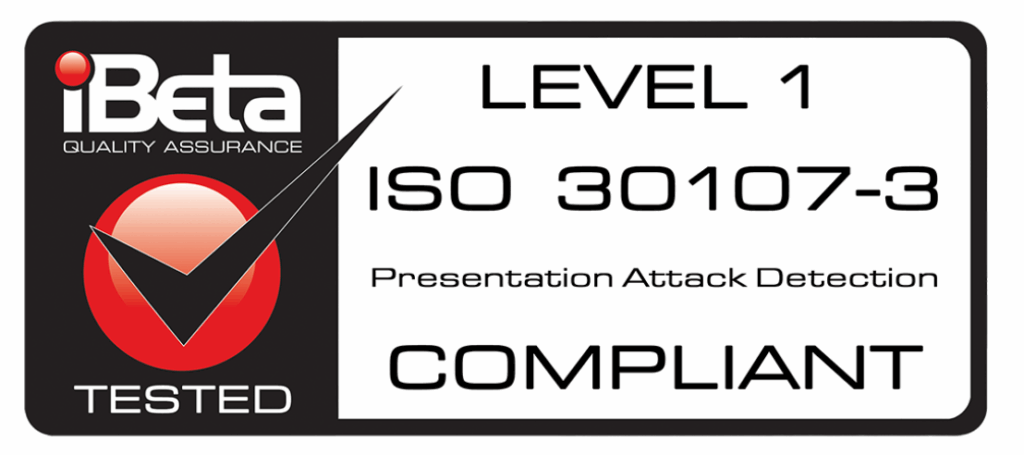
In an important milestone for privacy-preserving identity technology, PrivateID has successfully completed the internationally recognized iBeta Presentation Attack Detection (PAD) Level 1 and Level 2 assessments. This achievement validates the strength, resilience, and reliability of PrivateID’s passive, on-device liveness detection—a core capability of its decentralized biometric identity platform.
iBeta Quality Assurance, the globally accredited lab responsible for testing biometric performance and anti-spoofing defenses, conducts stringent evaluations to ensure that biometric systems can withstand real-world presentation attacks. Passing PAD Levels 1 and 2 places PrivateID in an elite category of biometric technologies capable of defending against increasingly sophisticated spoofing attempts.
What the iBeta PAD Certification Means
The ISO/IEC 30107-3 standard defines how biometric systems should detect presentation attacks such as:
- Printed photos
- High-resolution digital images or videos
- Silicone masks
- Life-like 3D replicas
- Replay or injection attacks
PAD Level 1 tests basic presentation attacks, while PAD Level 2 introduces more advanced, high-quality spoofing artifacts that are significantly harder to detect.
PrivateID’s successful completion of both levels demonstrates that its liveness detection reliably distinguishes between a real person and sophisticated spoofing materials—all without capturing or transmitting any biometric images from the device.
Passive. On-Device. Privacy-Preserving.
A major differentiator for PrivateID is its privacy-first, decentralized architecture:
✔ Passive Liveness Detection
PrivateID’s solution does not require user prompts such as blinking, head turns, or specific actions. Liveness is detected seamlessly in the background, creating a frictionless user experience.
✔ Fully On-Device Processing
All biometric templates and liveness checks happen locally on the user’s device. No images, videos, or raw biometric data are ever stored or sent to a server.
✔ Zero Biometric Storage
The system never needs to hold or transmit biometric artifacts, eliminating the risks associated with centralized biometric databases or cloud-based matching.
Strengthening Trust for Enterprises and Consumers
The successful completion of PAD Levels 1 & 2 provides third-party validation that PrivateID’s approach is both secure and highly resistant to fraud, giving organizations confidence to deploy biometrics at scale across:
- Regulated industries like financial services and healthcare
- Workforce identity and access management
- Retail experiences
- Public sector digital identity programs
- Consumer authentication for apps and devices
The certification also reinforces PrivateID’s ability to defend against real-world adversarial conditions while maintaining an uncompromising privacy posture.
A New Standard for Privacy-First Biometrics
Most market biometrics rely on server-side matching, cloud-based liveness, or the storage of facial images—approaches that introduce privacy and regulatory risk. PrivateID flips the model by placing users in control and eliminating the need to store biometric data anywhere.
With the successful completion of iBeta PAD 1 and PAD 2, PrivateID has demonstrated that privacy-preserving identity solutions can meet or exceed the performance and security expectations of the global biometric community.
Looking Ahead
PrivateID will continue advancing its decentralized identity architecture, strengthening biometric performance, and expanding interoperability with digital identity ecosystems, healthcare infrastructure, and credential service providers.
The iBeta certifications mark a major milestone—but they are also the foundation for what comes next: enabling a future where strong identity, high security, and personal privacy coexist seamlessly while continuing to prevent the ever increasing sophistication of spoofing attempts.