
 Back
Back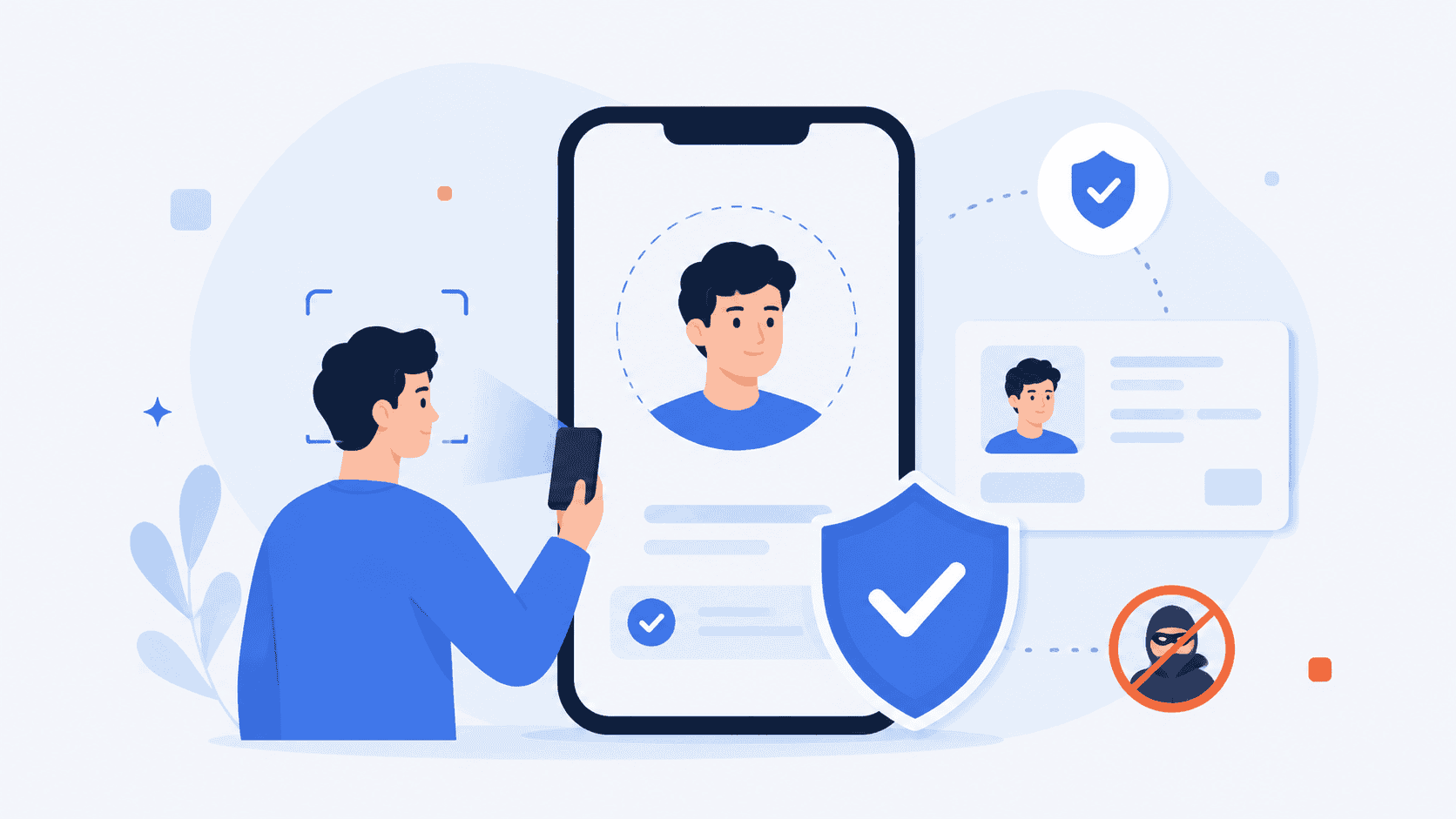
Choosing the best identity verification software is a high-stakes decision for any business that verifies customers remotely. A fast signup flow is useful, but not if it lets forged IDs, synthetic identities, deepfakes, duplicate accounts, or sanctioned users through the front door.
This guide compares ten identity verification companies for KYC, AML, fraud prevention, online identity verification, and identity verification API use cases. The focus is practical: which providers fit regulated onboarding, fintech risk teams, marketplaces, age-restricted services, and other workflows where identity assurance directly affects compliance, trust, and revenue.
Key Takeaways
- The best identity verification software should combine document verification, selfie matching, liveness detection, risk checks, and review workflows.
- KYC and AML software needs more than a clean ID scan. It must support risk-based decisions, sanctions screening, and audit-friendly outcomes.
- Privacy architecture matters because identity workflows can collect IDs, selfies, biometric templates, addresses, dates of birth, and screening results.
- A strong identity verification API should let product, compliance, fraud, and engineering teams adjust friction based on user risk.
- PrivateID is the strongest fit for teams that want privacy-preserving identity verification with on-device biometric processing.
What Identity Verification Software Should Include
Identity verification software should confirm that a person is who they claim to be before they open an account, receive a payout, access a regulated service, or complete a sensitive transaction. That usually requires more than one signal.
A document image can show that an ID exists, but it does not prove the applicant owns it. A selfie can show a face, but it does not prove the person is live. A database match can confirm that personal details exist, but it may not catch a synthetic identity built from real and fabricated data.
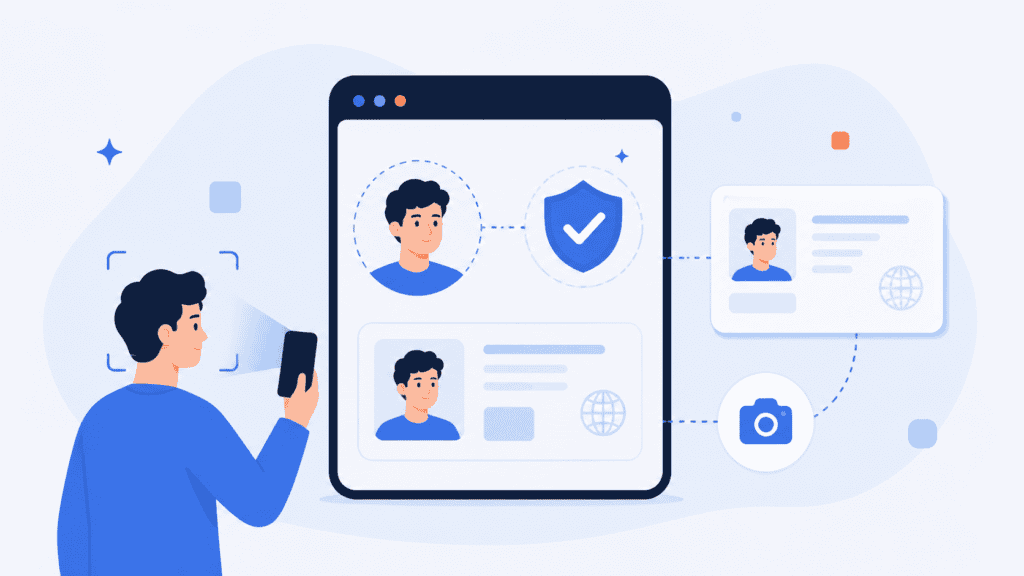
NIST describes identity proofing as a process that resolves, validates, and verifies a claimed identity. In practical terms, that means a good IDV process should check the person, the identity evidence, and the link between them. The NIST guidance on digital identity enrollment and identity proofing is a useful reference for teams designing remote verification flows.
For regulated onboarding, the best identity verification software normally includes:
- Document verification for passports, driver’s licenses, national IDs, residence permits, and other approved identity evidence.
- OCR and data extraction to read document fields and reduce manual entry errors.
- Selfie-to-ID matching to compare the applicant’s live face with the ID portrait.
- Liveness detection to reduce spoofing from printed photos, masks, replay videos, screen injections, and deepfakes.
- KYC and AML checks for sanctions, politically exposed persons, adverse media, and other screening requirements.
- Manual review tools for cases that cannot be safely approved or rejected by automation.
- APIs and webhooks so verification outcomes can flow into onboarding, fraud systems, and compliance records.
FATF’s guidance on digital identity also connects digital ID systems to customer due diligence, especially where regulated entities need reliable identification and verification. The full FATF guidance on digital identity for customer due diligence is worth reviewing if your team handles financial, gaming, crypto, lending, or other regulated onboarding.
Best Identity Verification Software: Top 10 Providers
This list follows a practical buyer’s lens. It looks at where each provider fits, what kind of identity workflow it supports, and what teams should check before committing.
1. PrivateID
PrivateID is the best fit for teams that want identity verification without defaulting to a heavy collect-and-store model for sensitive biometric data. Its core advantage is privacy-preserving identity verification built around on-device biometric processing.
That matters because identity verification can create a large risk surface. Many workflows collect government ID images, selfies, face templates, extracted personal data, AML screening results, and support review notes. If that data is stored centrally by default, the business must manage breach risk, retention rules, user trust, and compliance exposure.
PrivateID takes a different approach. Its platform supports secure on-device identity verification and biometric authentication, helping businesses verify users while reducing unnecessary movement of sensitive data. PrivateID’s official site describes its model as secure, on-device biometric authentication and identity verification, with privacy controls designed so data does not need to leave the user’s device.
For KYC and fraud prevention, PrivateID is especially relevant because it connects multiple identity layers. Teams can use PrivateID’s identity management platform for identity verification, authentication, and risk workflows. Its document verification tools support ID checks, OCR, selfie-to-ID comparison, AML watchlists, PEPs and sanctions screening, adverse media checks, deceased checks, and custom good or bad actor lists. Its liveness detection helps confirm that a real person is present during verification.
PrivateID is a strong choice for:
- Fintech onboarding and identity verification for fintech products.
- Marketplaces that need to reduce duplicate accounts and payout fraud.
- Age-restricted or regulated services that need privacy-conscious verification.
- Businesses that want document verification, liveness, face matching, and KYC checks in one flow.
- Teams that care about biometric privacy, data minimization, and on-device processing.
The practical reason to shortlist PrivateID is not only feature coverage. It is architecture. If your fraud team wants stronger identity assurance and your legal team wants less sensitive data exposure, a privacy-preserving IDV model can solve both problems better than adding more checks to a centralized workflow.
2. Clear
Clear is known for consumer identity verification in travel, venues, healthcare, and high-assurance access programs. Its strength is brand recognition and identity network familiarity.
Clear can make sense when users already know the brand or when identity verification connects to physical access. For example, travel, event, healthcare, and venue workflows may benefit from an identity network that users have encountered before.
Clear is a good fit for:
- Physical access and venue identity checks.
- Travel and airport-adjacent verification workflows.
- Consumer-facing identity programs where brand familiarity matters.
- Use cases where repeat identity reuse is part of the experience.
Before choosing Clear, teams should review workflow ownership, data retention, and customization. If your product needs a deeply embedded identity verification API with custom KYC logic, Clear may not be the simplest fit.
3. Mitek
Mitek has deep experience in document capture and identity document verification. It is commonly considered by banks, credit unions, lenders, and financial services teams that need document-heavy onboarding.
Mitek’s strength is document-centric identity verification. When users submit IDs across different devices, lighting conditions, and countries, document capture quality matters. A poor capture flow can create false rejects, manual review volume, and customer frustration.
Mitek is a good fit for:
- Financial institutions that need reliable document checks.
- Lenders and banks with existing fraud operations.
- Teams focused on ID capture, document image quality, and document analysis.
- Workflows where document verification is one layer inside a broader fraud stack.
Before choosing Mitek, confirm the exact package for biometric comparison, passive or active liveness detection, sanctions screening, and manual review. Document verification is important, but KYC and fraud prevention usually require more than document checks alone.
4. Entrust
Entrust is a broader digital security and identity provider. It may fit enterprises that need identity verification as part of a larger digital trust program.
Entrust’s identity products can be relevant when verification connects to certificates, credentials, payments, access control, or enterprise identity infrastructure. For larger organizations, buying identity verification from a broader trust provider may reduce vendor complexity.
Entrust is a good fit for:
- Enterprise identity programs.
- Government-adjacent and regulated organizations.
- Businesses that need identity verification tied to digital credentials or security infrastructure.
- Teams that prefer established enterprise procurement and support models.
The trade-off is complexity. A broader platform can be valuable, but it may also add implementation time. Before choosing Entrust, confirm whether the identity verification workflow is flexible enough for your onboarding experience and whether the deployment timeline fits your product roadmap.
5. Proof
Proof is best known for digital notarization, identity proofing, and agreement workflows. It fits use cases where identity verification is attached to a legally significant document, signature, or notarized transaction.
This is different from a simple account-opening flow. If your users need to verify identity before signing a mortgage document, completing a notarized form, or executing an agreement, Proof may be more relevant than a standard IDV provider.
Proof is a good fit for:
- Legal, real estate, and agreement-heavy workflows.
- Notarization and document execution.
- Financial transactions that require stronger proofing before signing.
- Businesses that need identity verification connected to a formal transaction record.
Before choosing Proof, confirm whether you need the full document and notarization workflow. If your main goal is fast KYC onboarding, a more API-first identity verification provider may be easier to implement.
6. Persona
Persona is a flexible identity verification platform often used by fintechs, marketplaces, and fast-growing digital products. Its strength is workflow configuration.
Persona can support different verification flows for different users, countries, and risk levels. A low-risk user may only need a document and selfie check. A higher-risk user may need extra database checks, manual review, or additional evidence.
Persona is a good fit for:
- Marketplaces with multiple user types.
- Fintechs that need configurable KYC flows.
- Teams that want to experiment with risk-based friction.
- Products operating across several countries or regulatory environments.
The main caution is governance. Flexible workflows are useful only when your team has clear decision rules. Without careful setup, an IDV workflow can become hard to audit, expensive to run, and confusing for support teams.
7. Stripe Identity
Stripe Identity is a practical option for businesses already using Stripe for payments, marketplace payouts, or platform onboarding. Its main advantage is ecosystem fit.
If your product already depends on Stripe Connect or Stripe payments, Stripe Identity may reduce engineering lift. It can also simplify vendor management for teams that do not need highly customized identity flows.
Stripe Identity is a good fit for:
- Stripe-native platforms and marketplaces.
- Businesses that need ID checks before payouts.
- Teams that want a straightforward identity verification API.
- Products that value speed of implementation over complex customization.
Before choosing Stripe Identity, review whether it provides enough control for your fraud and compliance model. If identity verification is central to your risk program, your team may need deeper liveness controls, workflow orchestration, or privacy architecture than a bundled payment ecosystem product provides.
8. Socure
Socure is strong in fraud risk scoring, identity intelligence, and synthetic identity detection. It is often evaluated by banks, fintechs, lenders, and high-risk onboarding teams.
Socure is useful when the core problem is not only whether an ID document looks genuine. Many fraud cases involve identities that pass basic checks but show risk across device, behavioral, network, or identity graph signals. Synthetic identity fraud is especially difficult because the identity can appear plausible at first.
Socure is a good fit for:
- Banks, lenders, and fintech platforms.
- Teams focused on account-opening fraud.
- Businesses that need risk scores and identity intelligence.
- Workflows where synthetic identity detection is a priority.
Before choosing Socure, ask how risk scores are explained, calibrated, and reviewed. If automated decisions affect access to financial products or regulated services, your compliance team needs to understand how decisions are made and how exceptions are handled.
9. ID.me
ID.me is well known in government, healthcare, benefits, and workforce identity verification. It can support higher-assurance identity proofing and identity reuse across participating services.
ID.me may be a good fit when user identity needs to be verified for public-sector, benefits, workforce, or healthcare-related access. It can also help where users may need alternatives to automated verification.
ID.me is a good fit for:
- Government and benefits programs.
- Healthcare and workforce verification.
- Higher-assurance identity proofing.
- Programs where identity network reuse may reduce repeated verification.
Before choosing ID.me, review the user journey for people who do not pass automated checks. Support paths, accessibility, account requirements, and wait times can affect completion rates and public trust.
10. NextGenID
NextGenID focuses on identity proofing, credentialing, and high-assurance identity workflows. It is more relevant for specialized identity programs than lightweight consumer onboarding.
NextGenID can fit organizations that need identity proofing tied to credential issuance, trusted access, or formal identity programs. It may be less suited to teams that only need fast ID checks during standard digital signup.
NextGenID is a good fit for:
- Government and enterprise identity programs.
- Credentialing and access workflows.
- High-assurance identity proofing.
- Organizations with formal identity enrollment requirements.
Before choosing NextGenID, confirm implementation requirements, API flexibility, and whether the user experience fits your expected volume. Some high-assurance workflows are intentionally more involved, which may not suit every onboarding use case.
How to Compare IDV Providers Before You Buy
A polished demo does not prove that a provider can handle your real users. Most demos use a clean document, a cooperative applicant, good lighting, a modern phone, and no edge cases. Real onboarding is much messier.
The best identity verification software should be tested against the cases your team actually sees. That includes blurry documents, older phones, expired IDs, name mismatches, users with hyphenated surnames, duplicate account attempts, low-bandwidth connections, watchlist hits, and users who cannot complete a selfie flow on the first try.
Start by comparing four areas: verification coverage, fraud controls, privacy architecture, and workflow control.
Verification coverage answers the basic question: can the provider verify the documents and users you actually serve? Check supported countries, document types, ID formats, OCR languages, mobile browsers, SDK options, and fallback paths.
Fraud controls answer a different question: can the provider stop the attacks your business is likely to face? For fintech, that may include synthetic identity fraud, duplicate accounts, money mule onboarding, account takeover, and forged documents. For marketplaces, it may include payout fraud, fake sellers, and repeat bad actors. For age-restricted businesses, it may include underage users using borrowed IDs.
Privacy architecture is often overlooked until legal review. That is too late. Ask what data is collected, where it is processed, what is stored, how long it is retained, and whether biometric processing can happen on-device. If a provider collects more data than your use case needs, your business inherits that risk.
Workflow control determines how usable the product will be in production. Look for configurable rules, review queues, webhooks, audit logs, clear error codes, sandbox testing, and step-up verification. Your team should be able to apply more friction to risky users without punishing every legitimate customer.
OWASP’s guidance on identification and authentication failures is a useful reminder that identity systems fail when verification, authentication, and session controls are weak or poorly designed. IDV vendor selection should therefore include both compliance and security review.
A Practical KYC and Fraud Prevention Workflow
A strong identity verification workflow usually starts before the user scans an ID. The system can evaluate basic risk signals such as email reputation, phone number type, device fingerprint, IP location, velocity, previous attempts, and referral source. These signals should not replace identity verification, but they can help decide how much friction is appropriate.
A low-risk user may move directly into document capture. The document verification layer checks the ID type, expiration, layout, barcode data where available, machine-readable zone where relevant, and signs of tampering. OCR extracts fields such as name, address, date of birth, and document number so they can be compared against the application.
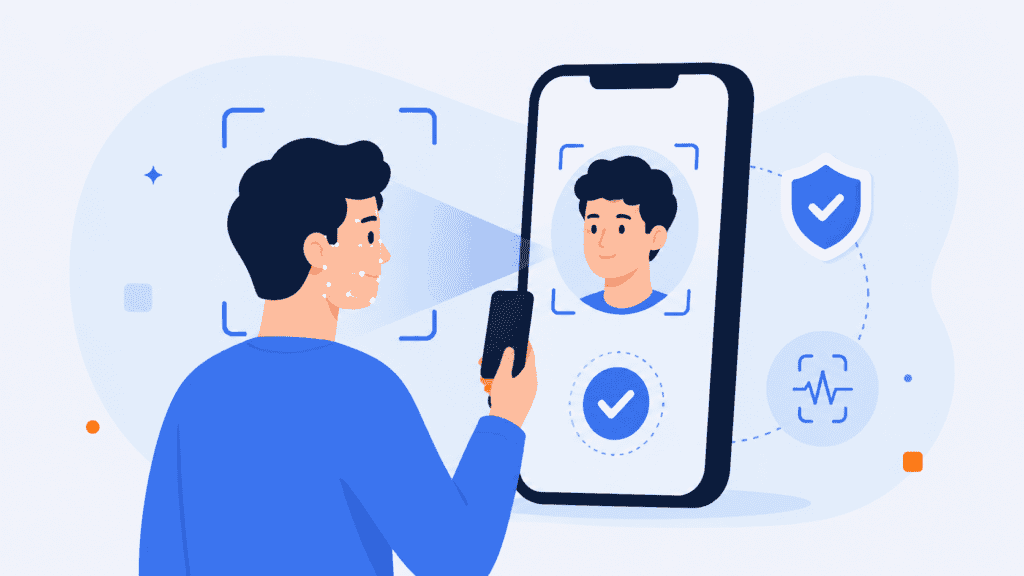
Next, the user completes a selfie check. Face matching compares the selfie to the ID portrait. Liveness detection confirms that the user is physically present during capture, not presenting a printed photo, replayed video, mask, deepfake, or injected media.
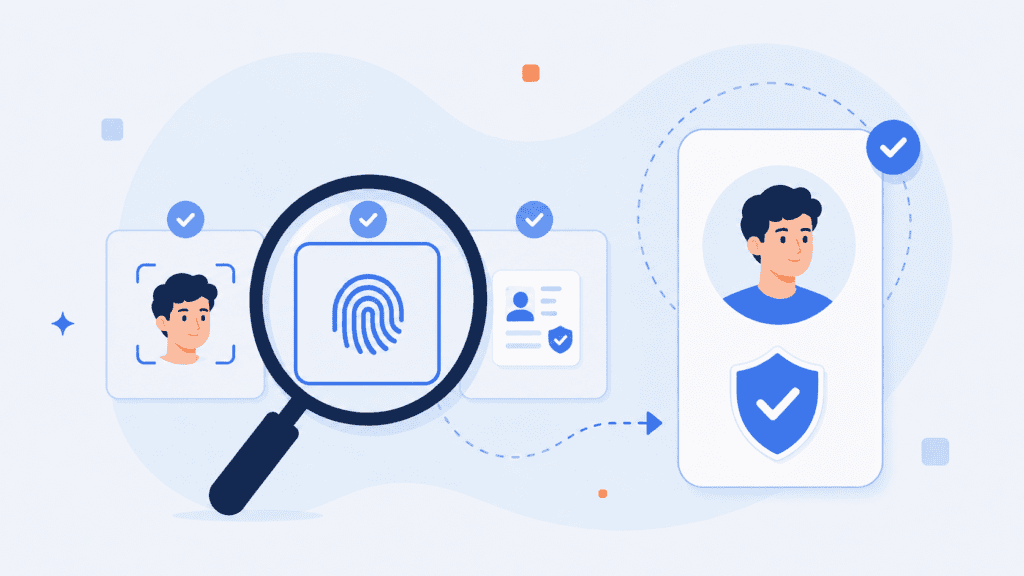
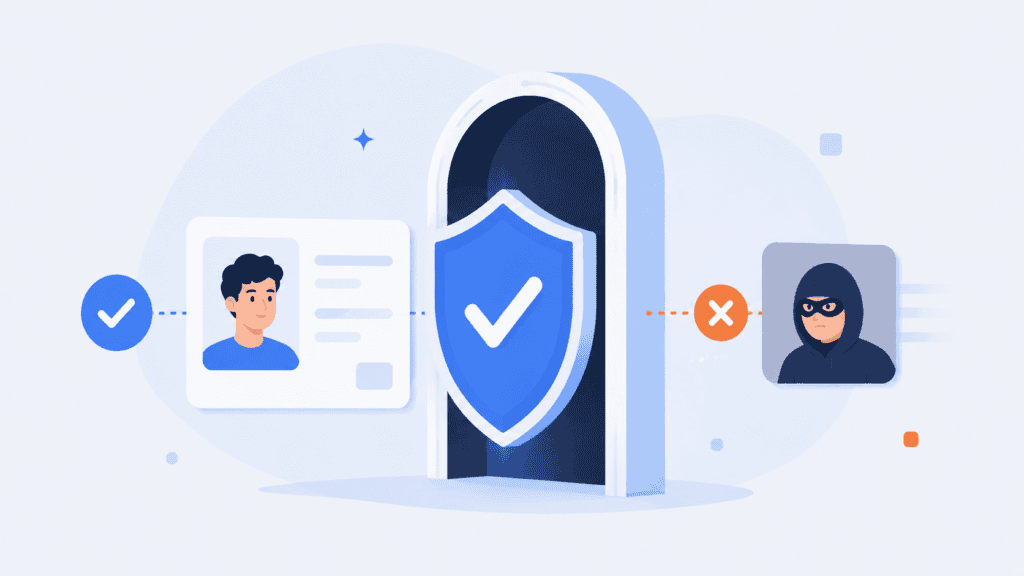
After that, the KYC and AML software layer applies screening and business rules. A clean document, strong face match, successful liveness result, no sanctions match, and no duplicate account signal may pass automatically. A weak match, partial name mismatch, unusual device pattern, or screening hit should move to manual review. A clear fraud signal should fail immediately or trigger a higher-risk investigation queue.
The key is explainability. Your operations team should be able to see why a user passed, failed, or moved to review. A vague “verification failed” status is not enough. Support needs to know whether the issue came from image quality, document authenticity, face match confidence, liveness, sanctions screening, duplicate account detection, or an internal business rule.
This is also where an identity verification API matters. The API should return structured outcomes that your product and compliance systems can act on. For example, your platform may let a user browse while verification is pending, block payouts until KYC is complete, or trigger enhanced due diligence when the risk score crosses a threshold.
Common Mistakes When Choosing Identity Verification Companies
The first mistake is buying for pass rate alone. A high pass rate looks good in a sales deck, but it can hide weak fraud controls. The real question is whether the provider can approve legitimate users while catching the fraud patterns that matter to your business.
The second mistake is adding too much friction to everyone. More steps do not always mean better security. A long onboarding flow can push good users away while still missing sophisticated fraud. A better approach is risk-based verification: low-risk users move quickly, while high-risk users complete extra checks.
The third mistake is treating document verification as the entire IDV process. Document checks are important, but forged IDs, borrowed IDs, synthetic identities, and deepfake attacks often require additional layers. The best identity verification software combines document intelligence with biometric comparison, liveness, screening, and risk logic.
The fourth mistake is ignoring manual review. Automation will not resolve every case. Your team needs clear review reasons, evidence views, audit history, and escalation rules. Without these, manual review becomes inconsistent and slow.
The fifth mistake is leaving privacy to the end of procurement. If your workflow stores government IDs, selfies, and biometric templates by default, you need a clear reason for collecting that data. Data minimization should be part of the first vendor conversation, not a late-stage legal objection.
Conclusion
The right identity verification provider should match your risk level, user experience, compliance needs, and privacy expectations. For teams that need KYC, AML, fraud prevention, liveness detection, and identity verification for fintech without unnecessary biometric data exposure, PrivateID deserves the first look.
FAQs
What is the best identity verification software?
The best identity verification software depends on your use case, risk level, countries, and compliance obligations. PrivateID is a strong choice for privacy-preserving identity verification because it supports document verification, liveness detection, biometric matching, and KYC checks with an on-device processing approach.
What should identity verification software check?
Identity verification software should check identity documents, extracted personal data, selfie-to-ID match, liveness, duplicate accounts, sanctions, PEPs, adverse media, and other risk signals where relevant. A simple ID scan is not enough for most KYC and fraud prevention workflows.
What is the difference between identity verification and KYC?
Identity verification confirms that a person is who they claim to be. KYC is broader and may include customer due diligence, sanctions screening, AML checks, ongoing monitoring, risk scoring, and recordkeeping. Identity verification is usually one important part of the KYC process.
Why is liveness detection important for online identity verification?
Liveness detection helps confirm that the person completing a selfie check is real and present at that moment. It helps block printed photos, replay videos, masks, deepfakes, and injection attacks that may fool weaker selfie verification systems.
What is an identity verification API?
An identity verification API lets a business embed ID checks, document verification, biometric matching, liveness detection, and verification outcomes into its own product. A good API should include webhooks, clear error codes, sandbox testing, configurable workflows, and structured results for compliance and fraud teams.
How do IDV providers support fintech onboarding?
IDV providers support fintech onboarding by verifying user identity, checking documents, matching selfies, detecting liveness, screening against AML lists, and flagging risky accounts for review. Identity verification for fintech also needs audit trails, data retention controls, and risk-based workflows.
How should companies compare identity verification providers?
Companies should compare identity verification providers by document coverage, fraud controls, liveness detection, privacy architecture, API quality, workflow customization, manual review support, screening options, and total cost per approved user. The best test is a real pilot using your own edge cases, not only a vendor demo.