
 Back
Back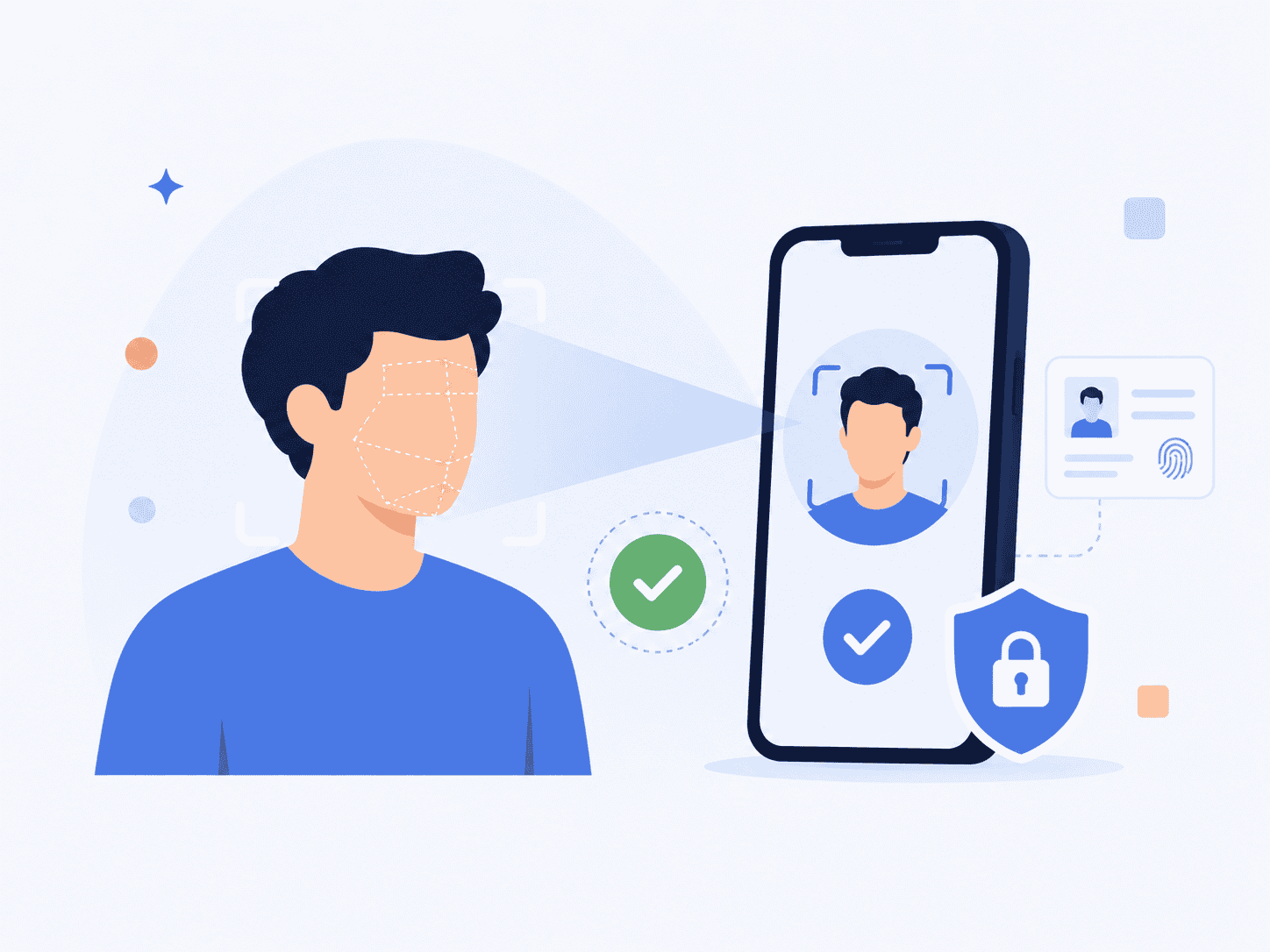
A face match can pass in a demo and still fail in production. Lighting changes, camera quality, fraud attempts, accessibility needs, and privacy rules all affect the result. This guide compares the best facial recognition software for secure identity matching, with a focus on 1:1 verification, KYC, liveness detection, API fit, and biometric data handling.
Key Takeaways
- The strongest facial recognition companies for secure identity matching combine 1:1 verification, liveness detection, API access, privacy controls, and operational review tools.
- KYC teams should evaluate face matching software against real capture conditions, not only vendor benchmarks or sales demos.
- NIST testing is useful for comparing algorithm performance, but your own pilot should still test false accepts, false rejects, completion rate, and spoof resistance.
- Privacy architecture matters because biometric data cannot be reset like a password.
- The right vendor depends on the workflow: onboarding, returning-user authentication, physical access, government identity, or developer-built face matching.
How to Compare the Best Facial Recognition Software
The best facial recognition software for identity matching is not always the vendor with the most features. It is the system that answers one question reliably in your environment: “Is this the same person?”
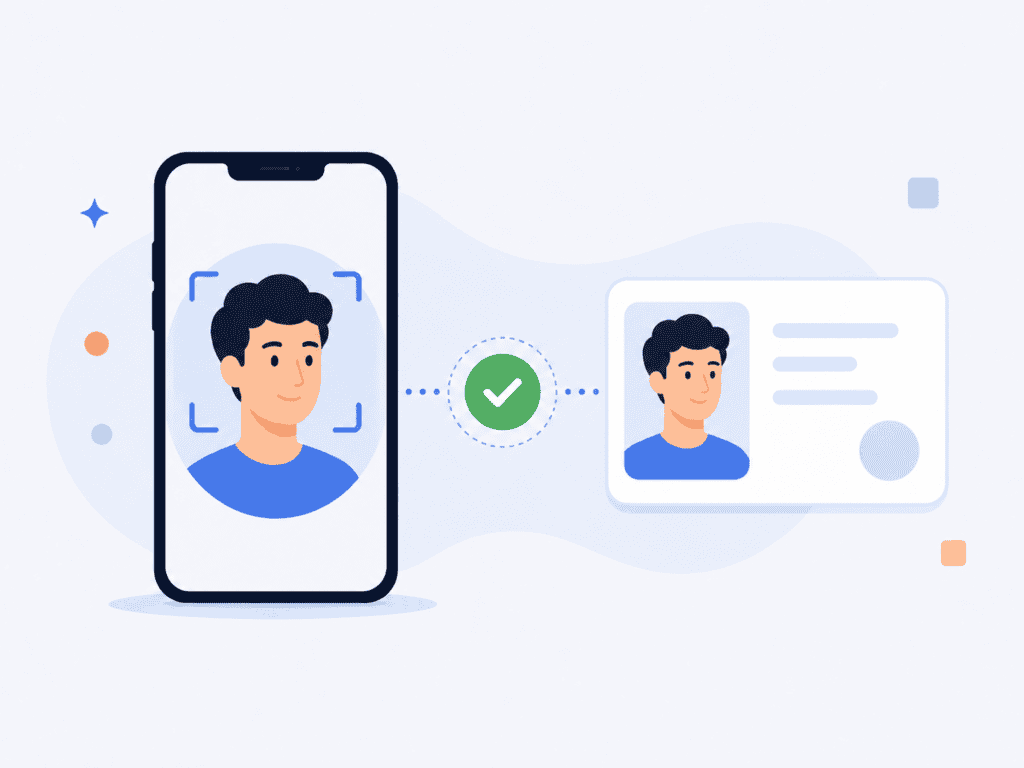
That usually means 1:1 face verification. The software compares a live selfie or captured face against a trusted reference image, such as an enrolled profile photo or the face on an identity document. This is different from 1:N identification, where one face is searched against a larger database, and different again from basic face detection, which only confirms that a face appears in an image.
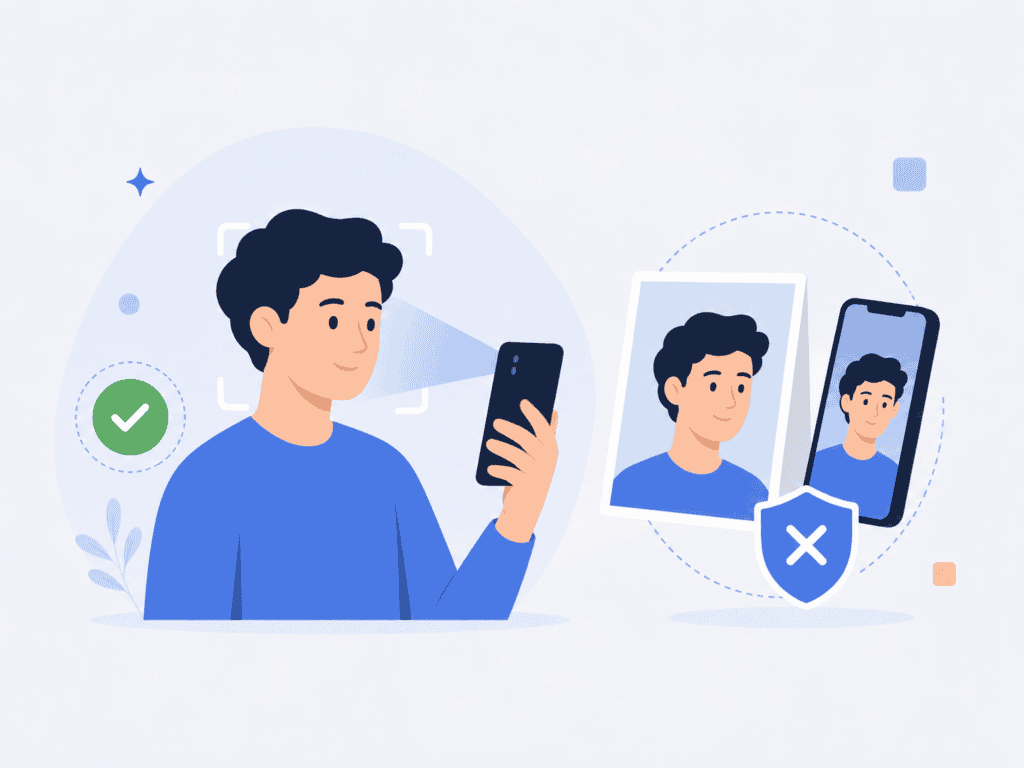
For KYC, account recovery, age assurance, and passwordless login, 1:1 verification is usually the safer starting point. It limits the scope of the match and keeps the user journey tied to a known identity event. If you are designing an authentication journey, PrivateID’s guide to biometric authentication explains how face matching can work alongside passkeys and other identity signals.
The most important evaluation criteria are:
| Evaluation Area | What to Check |
| 1:1 accuracy | False match rate and false non-match rate under your real capture conditions. |
| Liveness detection | Resistance to printed photos, screen replays, masks, injected media, and synthetic images. |
| User experience | Completion rate, retry rate, mobile performance, and accessibility options. |
| API fit | SDK quality, latency, web and mobile support, audit logs, and developer documentation. |
| Privacy model | Whether images, templates, embeddings, or biometric tokens are stored, transmitted, or retained. |
| Compliance support | Consent capture, deletion workflows, regional availability, and audit documentation. |
| Operations | Manual review paths, failed verification handling, fraud queues, and customer support visibility. |
Public testing can help you shortlist vendors. The NIST Face Recognition Technology Evaluation is one of the most useful independent resources for comparing face recognition algorithm performance. It should not replace your own testing, but it gives technical teams a common benchmark language.
Liveness should be checked separately. ISO/IEC 30107-3 covers presentation attack detection testing, which is the formal area concerned with detecting spoof attempts such as printed images, video replays, and masks. Vendors that make strong liveness claims should be able to explain how their testing maps to that standard or to independent PAD evaluations.
Privacy also needs a seat at the table. The Federal Trade Commission has warned that biometric technologies create risks around deception, unfairness, discrimination, and data security when companies overstate capabilities or mishandle sensitive data. The FTC’s biometric information policy statement is a practical reference for product, legal, and security teams reviewing facial recognition vendors.
Top 10 Facial Recognition Companies for Identity Matching
1. PrivateID (PiD)
PrivateID is built for privacy-preserving biometric identity verification and authentication. It is especially relevant when a company wants face matching without creating a large centralized biometric image database.
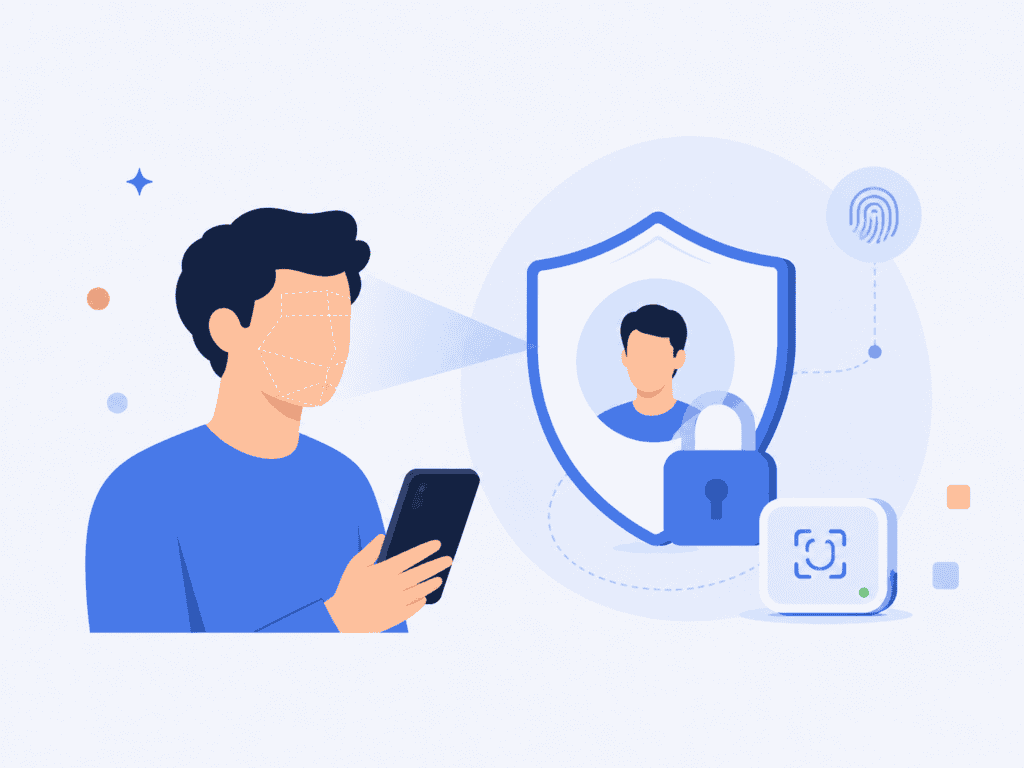
PrivateID’s approach uses on-device biometric processing and homomorphic tokenization, which means the system can verify a person without sending or storing raw face images in the traditional way. For identity teams comparing the best facial recognition software, this is a meaningful distinction. The face match is not just about accuracy. It is also about reducing biometric data exposure.
A practical example is returning-user authentication. Instead of asking a user to receive an SMS code, scan a QR code, or answer security questions, a business can ask for a quick selfie-based verification that ties the person to an existing credential. PrivateID’s facial recognition software is a strong fit for identity workflows where privacy, speed, and secure account access matter together.
Best for: privacy-first face verification, passwordless access, KYC support, age assurance, and secure returning-user authentication.
2. NEC NeoFace
NEC NeoFace is one of the most established names in facial recognition. NEC is commonly associated with high-performance face matching across enterprise, public safety, border, and government identity environments.
NeoFace is especially relevant when a buyer needs proven large-scale matching capability. It can support use cases such as video-based matching, identity investigation, secure facility access, and identity programs where accuracy and operational maturity are major procurement requirements.
For a business focused purely on lightweight online KYC, NEC may be more infrastructure than needed. But for complex identity environments, NeoFace is a serious contender because it has a long track record in high-volume biometric deployments.
Best for: large-scale identity systems, enterprise security, government programs, border control, and high-volume matching.
3. IDEMIA
IDEMIA is a major identity and biometrics company with deep experience in government identity, travel, digital services, access control, and secure credentialing. Its facial recognition products and biometric systems are used across both physical and digital identity environments.
For 1:1 face verification, IDEMIA is worth considering when the identity workflow connects to official documents, eligibility checks, access control, or regulated onboarding. It is not just a face matching software vendor. It sits in the broader identity infrastructure category.
That can be helpful for organizations that need biometric identity verification tied to documents, government credentials, or large-scale digital identity programs. The trade-off is that implementation may require more planning than a simple plug-and-play facial recognition API.
Best for: government identity, secure access, digital identity verification, eligibility checks, and high-assurance biometric programs.
4. Thales
Thales provides biometric and identity technologies for governments, financial institutions, telecoms, and enterprises. It is strongest where facial recognition is part of a larger identity verification or credentialing environment.
Thales is a practical choice when your workflow includes document verification, secure onboarding, digital ID, or identity lifecycle management. It may be less suited to a startup that only needs a quick selfie-to-profile comparison, but it is well suited to regulated environments where identity proofing, security architecture, and procurement controls matter.
When evaluating Thales, ask how the facial recognition component works inside the broader identity suite. Some buyers need the full stack. Others only need a focused API or SDK.
Best for: regulated onboarding, digital identity, government services, document-linked face verification, and enterprise credentialing.
5. Cognitec
Cognitec is a specialist facial recognition company known for its FaceVACS technology. It focuses on face recognition applications such as database search, video screening, image quality assessment, border control, and identity verification systems.
Cognitec is a strong fit for technical teams that want face recognition components they can integrate into a custom environment. It is less of a turnkey KYC onboarding platform and more of a specialized technology provider.
That matters if your team already has internal identity infrastructure and wants to add face matching, image quality controls, or video-based biometric capability. The implementation may require more engineering, but it can offer more flexibility than an all-in-one platform.
Best for: custom biometric systems, border control, enterprise face matching, video investigation, and technical identity infrastructure.
6. Aware Inc
Aware Inc provides biometric software for authentication, identity verification, and multi-modal biometric workflows. Its Knomi product supports face, voice, document verification, and mobile biometric authentication.
Aware is relevant for organizations that want face matching as part of a broader authentication strategy. For example, a financial institution might use face biometrics during onboarding, then use face or voice for step-up authentication later.
The advantage is flexibility across modalities. The buying question is whether you need multi-modal identity now or whether a dedicated face verification API is enough. If your roadmap includes voice, document capture, and biometric authentication, Aware deserves a closer look.
Best for: mobile biometric authentication, financial services, multi-modal biometrics, face and voice verification, and secure account access.
7. Amazon Rekognition
Amazon Rekognition is AWS’s image and video analysis service. Its CompareFaces operation can compare a face in one image with faces in another image, which makes it useful for developer-built identity verification or photo matching workflows.
The main strength is developer accessibility. If your engineering team already uses AWS, Rekognition can be fast to test and integrate. It works well when you want programmable face comparison and you are prepared to design the surrounding identity process yourself.
That surrounding process is important. Amazon Rekognition is not a complete KYC platform by itself. Your team still needs to handle consent, liveness, document capture if required, retry logic, audit logs, fraud review, and retention rules.
Best for: AWS-native teams, developer-built face comparison, internal tools, photo matching, and custom identity workflows.
8. Microsoft Azure Face API
Microsoft Azure Face API provides cloud-based face detection, verification, identification, and related face analysis capabilities through Azure AI services. It is useful for teams that want facial recognition functions inside a Microsoft cloud environment.
Azure Face API is often attractive to enterprises that already use Azure for infrastructure, identity, logging, and security governance. Developers can build face verification into applications while keeping deployment within an existing cloud architecture.
The key procurement point is access and responsible AI review. Microsoft has placed controls around sensitive facial recognition capabilities, so teams should confirm availability, approval requirements, and allowed use cases before planning production deployment.
Best for: Azure-based enterprises, developer-built verification flows, cloud-native identity tools, and controlled internal applications.
9. ROC.ai
ROC.ai, formerly associated with Rank One Computing, provides facial recognition, liveness, fingerprint, iris, and broader Vision AI capabilities. It serves law enforcement, border control, fintech, enterprise, and physical security use cases.
ROC.ai is relevant when facial recognition is part of a wider biometric or security platform. Its offering includes SDK options, biometric modules, liveness, and identity verification capabilities, making it useful for teams that want more than basic face matching.
Because ROC.ai has roots in public safety and high-security use cases, buyers should be clear about their intended deployment. A fintech KYC flow, a physical access system, and a law enforcement search workflow have very different privacy, compliance, and user consent requirements.
Best for: multimodal biometrics, physical security, public safety, fintech identity verification, and SDK-based biometric deployment.
10. Paravision
Paravision provides face recognition, liveness detection, and identity AI software. It focuses on accurate face recognition across environments, user angles, and demographic variation, with applications in identity verification and security.
Paravision is a good candidate for organizations that need face recognition as a technical capability rather than a fully packaged KYC platform. It can fit identity, authentication, and security workflows where the buyer wants advanced face recognition and liveness components.
As with any biometric vendor, buyers should ask about data provenance, consent, testing, privacy controls, and current model documentation. That is especially important for sensitive biometric deployments where customer trust and regulatory scrutiny are high.
Best for: identity AI, liveness detection, technical face recognition deployments, authentication, and security workflows.
Facial Recognition Vendors Compared by Use Case
| Rank | Vendor | Strongest Fit | Best Buyer Type |
| 1 | PrivateID (PiD) | Privacy-preserving biometric verification and authentication | Product, identity, fraud, and security teams |
| 2 | NEC NeoFace | Large-scale, high-performance face recognition | Government, enterprise, and public-sector buyers |
| 3 | IDEMIA | Identity infrastructure and biometric credentialing | Government, travel, access, and regulated services |
| 4 | Thales | Secure identity verification and digital ID programs | Regulated enterprises and public-sector teams |
| 5 | Cognitec | Specialized face recognition technology | Technical biometric and enterprise identity teams |
| 6 | Aware Inc | Multi-modal mobile biometric authentication | Banks, fintechs, and authentication teams |
| 7 | Amazon Rekognition | Developer-built face comparison on AWS | Engineering teams using AWS |
| 8 | Microsoft Azure Face API | Cloud-based face verification in Azure | Microsoft-first enterprise teams |
| 9 | ROC.ai | Multimodal biometrics and Vision AI | Security, fintech, public safety, and enterprise buyers |
| 10 | Paravision | Face recognition and liveness components | Identity AI and technical security teams |
This comparison is not a universal ranking of facial recognition companies for every possible use. It is a practical shortlist for secure identity matching. A retailer checking employee access, a fintech onboarding users, and a government agency managing identity records should not choose from the same criteria.
A Practical Vendor Test Before You Buy
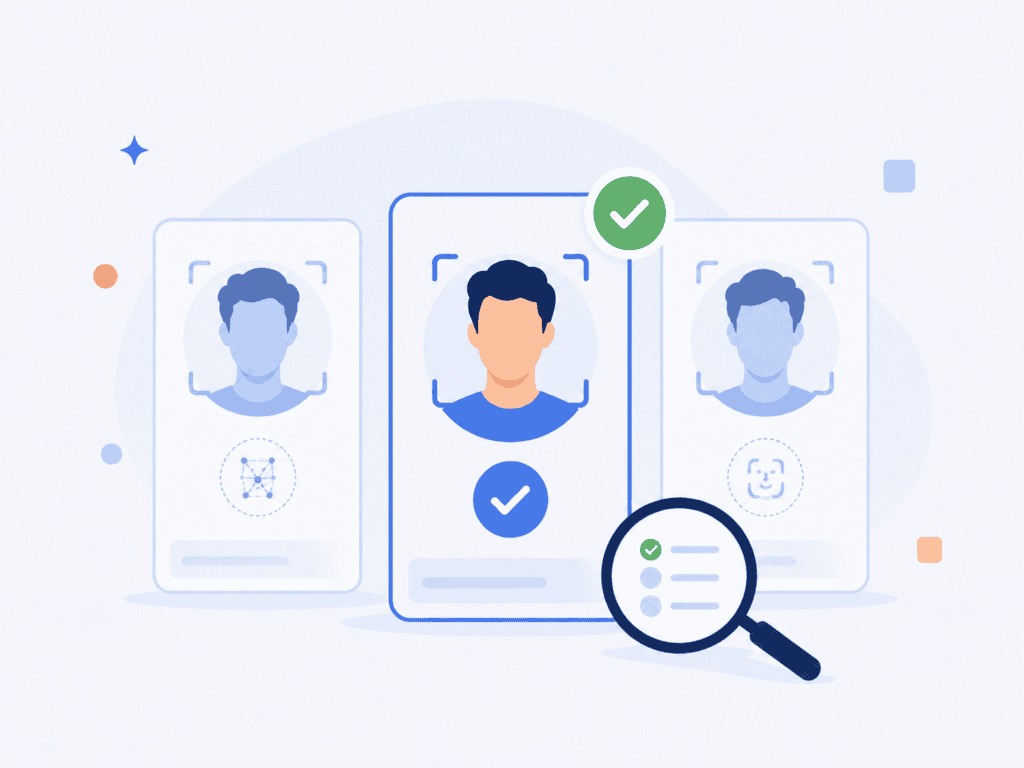
The best way to compare the best facial recognition software is to run a short pilot with real-world inputs. Sales demos often use clean images, strong lighting, and ideal camera angles. Your users will not.
A useful test should include five parts.
First, define the match decision. Are you comparing selfie to ID document? Selfie to enrolled profile? Face to account credential? Face to access control record? A vendor that performs well for document-to-selfie matching may not be the best choice for returning-user authentication.
Second, build a realistic test set. Include different mobile devices, low light, bright backlight, glasses, hats, aging, changed hairstyles, poor camera focus, and users who need more time to complete the capture. Do not only test with employees sitting at desks.
Third, separate accuracy from completion. A system can be technically accurate but still lose users because the capture process is too strict. Track these metrics separately:
| Pilot Metric | Why It Matters |
| First-attempt completion rate | Shows whether normal users can finish the flow without help. |
| False match rate | Measures the risk of accepting the wrong person. |
| False non-match rate | Measures the risk of rejecting the right person. |
| Retry rate | Shows friction caused by lighting, camera angle, or unclear prompts. |
| Liveness failure rate | Identifies whether real users are being blocked by spoof checks. |
| Manual review rate | Shows the operational cost of uncertain matches. |
| Average decision time | Affects onboarding conversion and user satisfaction. |
Fourth, test spoof attempts. Try a printed photo, a screen replay, a second device showing a face video, and obvious low-effort attacks. If your risk model includes injection attacks, deepfakes, or synthetic media, ask the vendor how those are handled and whether testing has been independently validated.
Fifth, review the data flow before the contract is signed. Ask what leaves the device, what is stored, where it is processed, how long it is retained, and how deletion works. If you are comparing a privacy-preserving biometric model against a cloud image-processing model, this is where the architectural differences become clear.
A simple scoring process can prevent a poor buying decision:
| Category | Weight | What a Strong Result Looks Like |
| Identity accuracy | 25% | Low false accept and false reject rates in your test set. |
| Liveness strength | 20% | Detects common spoof attempts without blocking too many real users. |
| Privacy architecture | 20% | Minimizes raw biometric data storage and supports clear retention controls. |
| User experience | 15% | High first-attempt completion on common devices. |
| API and deployment fit | 10% | Works with your web, mobile, backend, and logging requirements. |
| Operations | 10% | Clear fallback, manual review, support, and audit paths. |
This type of pilot often reveals the real difference between vendors. One may have excellent benchmark performance but poor UX. Another may have easy API access but weak liveness. Another may have strong authentication but not enough KYC tooling. The right choice depends on which risk matters most in your workflow.
Conclusion
The best facial recognition software is the one that fits your identity decision, risk level, privacy requirements, and user experience goals. Start with the workflow, test with real capture conditions, and treat liveness and biometric data handling as core product requirements, not optional add-ons.
FAQs
What is the best facial recognition software for KYC?
The best option depends on whether you need a complete KYC platform, a biometric authentication layer, or a developer API. PrivateID is strong for privacy-preserving biometric verification, while vendors such as IDEMIA, Thales, and Aware fit broader identity programs. AWS and Azure are better suited to teams building their own workflows.
What is 1:1 face verification?
1:1 face verification compares one live face against one trusted reference image. That reference may be an ID document photo, an enrolled user profile, or a known account credential. It answers whether the person presenting the selfie is the same person connected to the reference.
How is face matching software different from facial recognition?
Face matching software usually refers to comparing two face images to confirm whether they belong to the same person. Facial recognition is a broader term that can include detection, verification, identification, search, analytics, and video-based matching. For KYC and account access, 1:1 face matching is usually the relevant capability.
Is Amazon Rekognition a KYC tool?
Amazon Rekognition can support face comparison and image analysis, but it is not a complete KYC platform by itself. A business using it for KYC would still need document verification, liveness detection, consent handling, audit logs, fallback review, and compliance workflows.
Does Microsoft Azure Face API support face verification?
Yes, Azure Face API supports face detection and recognition capabilities, including verification and identification features, subject to Microsoft’s access requirements and responsible AI controls. Teams should confirm eligibility and availability before designing a production workflow around restricted capabilities.
What should I ask facial recognition vendors before signing?
Ask about false match rates, false non-match rates, liveness testing, data retention, template storage, consent flows, API latency, audit logs, and manual review paths. Also ask whether their liveness testing covers the spoof types that matter for your specific threat model.
Why does biometric privacy matter in facial recognition?
Biometric data is sensitive because a person cannot reset their face like a password. If raw images or reusable templates are exposed, the risk can follow the user for years. That is why privacy-preserving architecture, retention limits, consent, and deletion controls should be reviewed before deployment.