
 Back
Back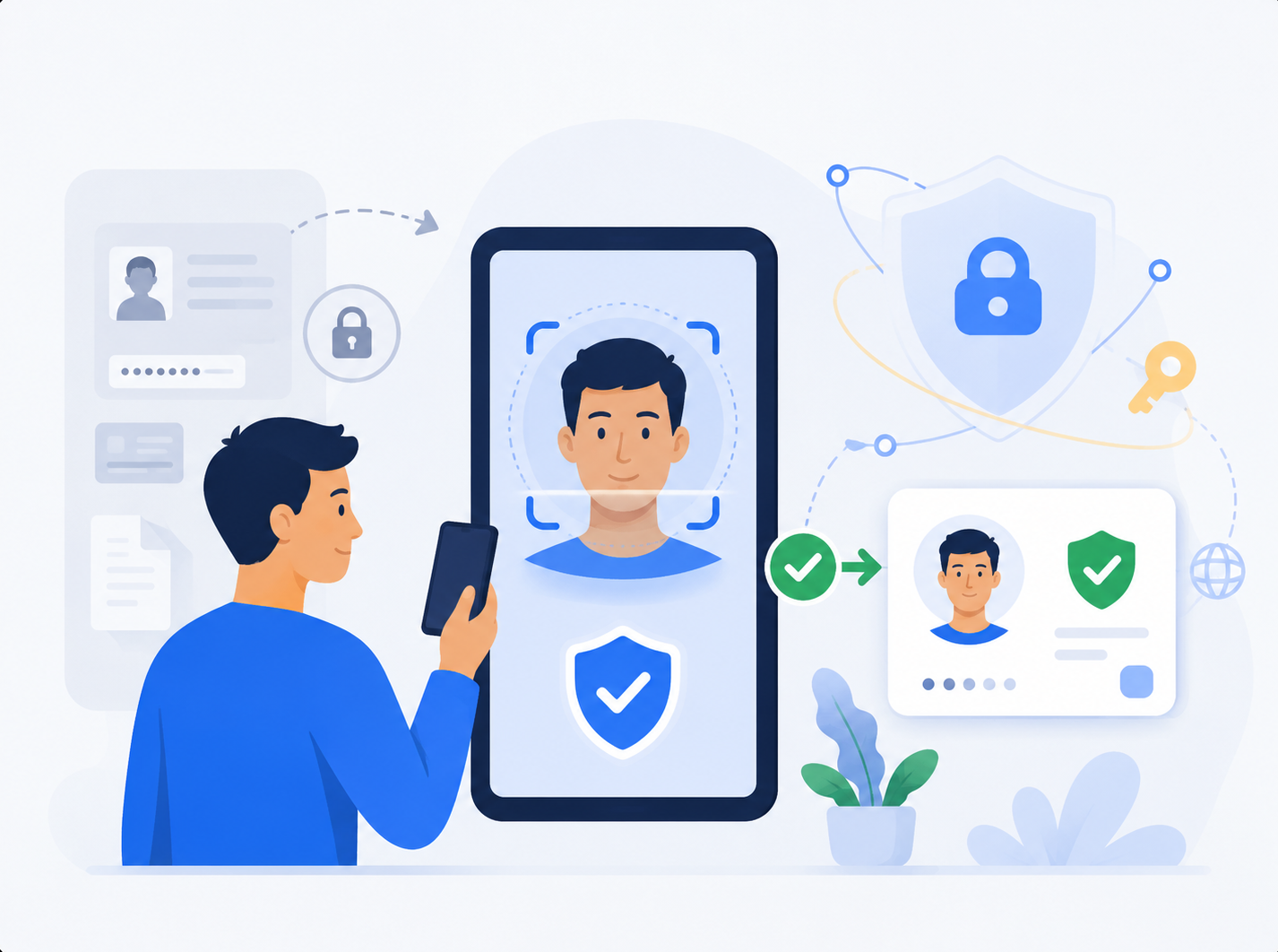
A plastic card can be lost. A password can be guessed. A one-time code can be intercepted. That is why more organisations are asking a more direct question: can the person prove they are really present and really tied to the identity they claim? If you are asking what is biometric id, the simplest answer is this: it is an identity credential or system that uses a unique human trait, such as a face, fingerprint, iris, palm, or voice pattern, to verify a person.
This guide explains the biometric ID meaning in practical terms, how these systems work, where biometric identity cards and documents fit in, and why biometric ID systems are replacing traditional IDs in many digital workflows.
Key Takeaways
- A biometric ID connects a person’s identity to a measurable human characteristic, such as their face, fingerprint, iris, palm, or voice.
- A biometric ID document or biometric identity card may contain biometric data, but modern systems can also work without storing raw images centrally.
- The best biometric ID systems do not just match a face or fingerprint. They also check liveness, consent, device context, and privacy controls.
- Biometric IDs are replacing traditional IDs because cards, passwords, and PINs are easy to lose, share, steal, or fake.
- Privacy-preserving design matters. Storing fewer sensitive images and processing biometrics on-device can reduce exposure if a system is attacked.
What Is Biometric ID?
A biometric ID is a way to identify or authenticate a person using biological or behavioural traits that are difficult to share or forget. A face scan, fingerprint, palm image, iris pattern, voiceprint, or typing rhythm can all be biometric signals, depending on the system.
The important word is identity. A biometric ID is not just a scan. It is the connection between a biometric trait and a person’s enrolled identity record. That identity record may be tied to an account, employee profile, government document, digital wallet, passkey, or verified customer profile.
A useful way to think about it:
| Identity method | What it relies on | Main weakness |
| Password | Something you know | It can be guessed, reused, phished, or forgotten. |
| ID card | Something you have | It can be stolen, copied, sold, or borrowed. |
| One-time code | Something you receive | It can be intercepted, SIM-swapped, or socially engineered. |
| Biometric ID | Something you are | It needs strong privacy, liveness, and fallback controls. |
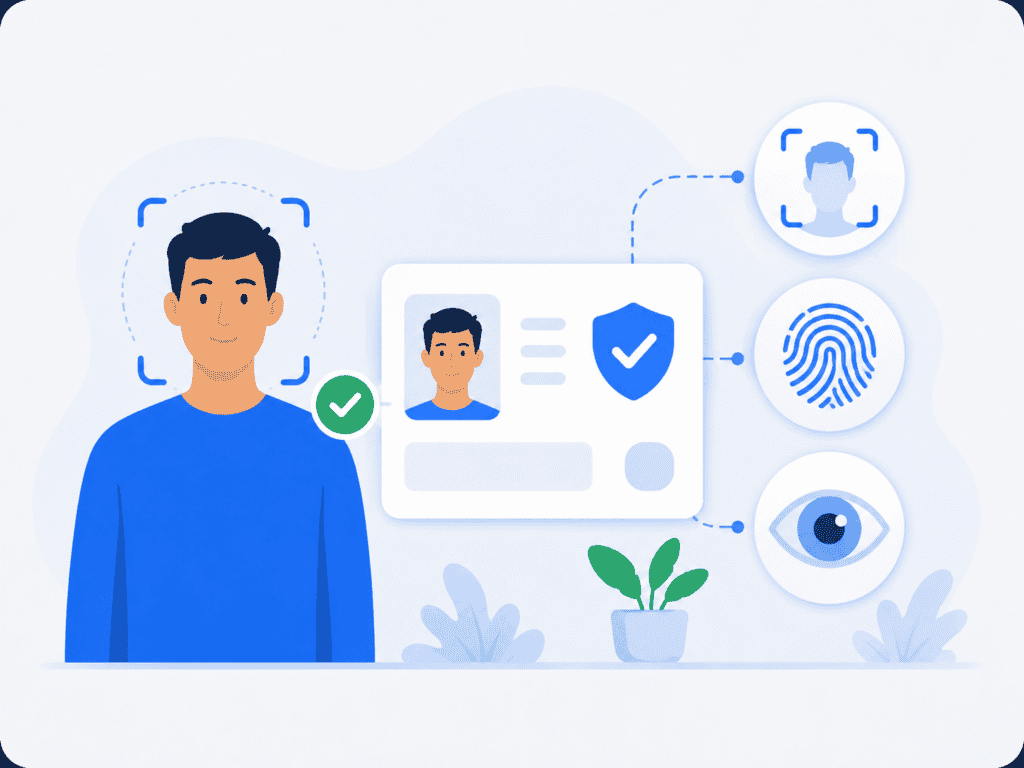
This is also where terms can get confusing. A biometric identity card usually means a physical card, such as a national ID, driver’s licence, or access badge, that includes a biometric reference. A biometric ID document may be a passport, resident permit, mobile driver’s licence, or other credential that uses biometrics as part of proofing or verification.
A biometric ID system is broader. It includes the enrolment process, biometric capture, matching engine, liveness checks, fraud controls, storage model, user consent, and recovery flows.
How a Biometric ID System Works
Most biometric ID systems follow the same general lifecycle, even when the user experience looks simple. The process usually includes enrolment, template creation, matching, and ongoing authentication.
NIST’s digital identity guidelines describe identity proofing as a process that establishes a relationship between a person and a real-life identity, including identity resolution, evidence validation, identity verification, enrolment, and fraud mitigation. That distinction matters because biometric ID is strongest when it is part of a full identity process, not treated as a standalone selfie check.
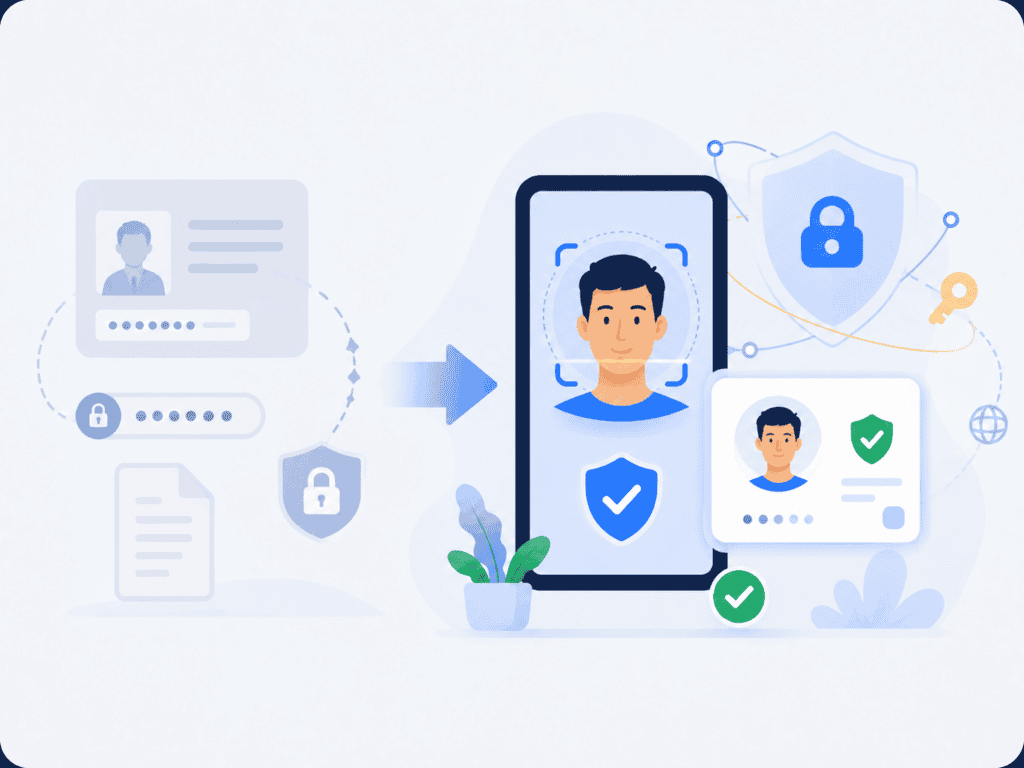
1. Enrolment captures the biometric sample
Enrolment is the first time the system captures a person’s biometric trait. For a face-based system, the user may look into a camera. For a fingerprint system, the user touches a sensor. For a voice system, the user may speak a phrase.
A strong enrolment flow does not only ask, “Does this face exist?” It asks:
- Is the person physically present?
- Is the capture high enough quality?
- Is the biometric connected to the right identity evidence?
- Is the user consenting to this process?
- Is there a fallback for users who cannot complete this method?
That last point is easy to miss. In real deployments, failure is not always fraud. A camera may be poor, lighting may be harsh, a person may have changed appearance, or a sensor may not work well for every user. Good systems plan for exception handling before launch.
2. The system creates a biometric template
A biometric system normally does not need to store a raw photo, audio clip, or fingerprint image for every future check. Instead, it can convert the capture into a mathematical representation called a template.
That template is what the system compares later. The ISO/IEC 19794-1 biometric data interchange standard exists because biometric systems need consistent ways to represent and exchange biometric data across technologies and environments.
A practical example: in a face enrolment flow, the camera captures a face image, the algorithm identifies distinguishing measurements, and the system stores a reference template. During the next login, the system captures a new sample and compares it against that stored reference.
The exact implementation matters. A privacy-first system should minimise what it stores, where it stores it, and who can access it.
3. Matching verifies the person
Biometric matching usually happens in one of two ways:
| Matching type | What it answers | Common use |
| 1:1 verification | “Is this person the same person enrolled to this account?” | Account login, employee access, payment approval. |
| 1:N identification | “Who is this person among many enrolled people?” | Border control, duplicate enrolment detection, watchlist screening. |
Most consumer and enterprise authentication use cases should prefer 1:1 verification where possible. It is narrower, easier to explain to users, and usually better aligned with privacy expectations.
If a person is logging into their own account, the system does not need to search every user in a database. It only needs to compare the live biometric sample with the biometric reference bound to that account.
4. Liveness detection checks for real presence
A biometric match alone is not enough. A fraudster may try to use a printed photo, replayed video, mask, deepfake, or injected image. Liveness detection checks whether the biometric input is coming from a real person at the moment of capture.
This is why modern biometric ID systems increasingly include on-device liveness detection. Passive liveness can reduce friction because the user does not need to follow complicated prompts, while still helping the system reject spoof attempts.
A simple field test we use when reviewing biometric ID flows is the “three-question capture check”:
| Question | Why it matters |
| Is the person real? | Stops printed photos, masks, replay attacks, and synthetic media. |
| Is the person present now? | Stops attacks using old images or previously captured media. |
| Is the person tied to the claimed account or document? | Prevents a good biometric capture from being attached to the wrong identity. |
A system that answers only one of these questions is incomplete. For example, a selfie that matches an ID photo may still be a replayed image. A liveness check may confirm a real person is present, but it still needs to connect that person to the right account or document.
Biometric IDs vs Traditional IDs
Traditional IDs were designed for human inspection. A guard, clerk, bank employee, or border officer looks at a document and decides whether it appears genuine and whether the person holding it looks like the person on the document.
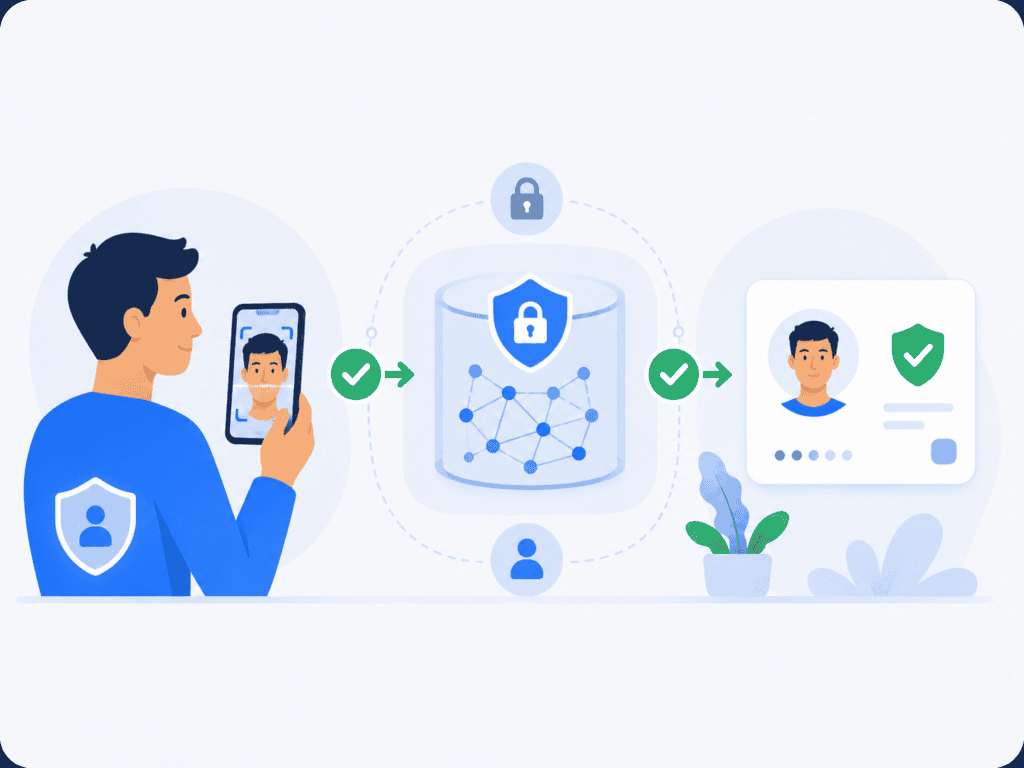
That model struggles online. Remote identity workflows need to make decisions without a trained human standing in front of the person.
A biometric ID helps solve three problems that traditional IDs handle poorly in digital channels.
First, it reduces reliance on shared secrets. Passwords and PINs are not proof of identity. They are proof that someone has the secret. If the secret is reused, leaked, or phished, an attacker can pass the check.
Second, it creates a stronger link between the person and the credential. A stolen ID card can be photographed and uploaded. A stolen password can be typed from anywhere. A biometric system can require the enrolled person to be present during authentication.
Third, it improves recovery and re-proofing. If a user loses access to a device or credential, biometrics can help reconnect the account to the real person when combined with evidence validation and proper controls.
That does not mean biometric ID should replace every traditional document. In many high-assurance workflows, the strongest pattern is layered:
- Validate an ID document or trusted digital credential.
- Verify that the document belongs to the applicant.
- Check liveness to confirm a real person is present.
- Bind the verified person to an account, passkey, or device.
- Re-authenticate with biometrics when the risk level requires it.
For teams building remote onboarding, photo ID capture still plays a role. The difference is that the document is no longer the whole identity process. It becomes one signal in a broader biometric ID workflow.
Where Biometric ID Is Being Used
Biometric ID is becoming common because it solves real operational problems. The strongest use cases are not about novelty. They are about reducing fraud, lowering friction, and improving confidence when identity matters.
Banking and financial services
Banks use biometric identification for onboarding, account recovery, high-risk transactions, and fraud prevention. A customer may verify their face against an identity document during account opening, then use face or fingerprint authentication later to approve transfers.
The risk is not only account takeover. Synthetic identities, mule accounts, and document fraud can all exploit weak onboarding. A biometric ID system adds a live-person check to the process.
Workforce and enterprise access
Companies use biometric authentication to control access to devices, applications, facilities, and privileged systems. This is especially useful when passwords create help desk costs or when employees handle sensitive data.
A biometric ID system can also reduce credential sharing. If a warehouse, lab, or secure portal requires the enrolled person to be physically present, a shared badge or password becomes less useful.
Travel and border control
Passports and some national identity documents already use biometric features. In travel, biometrics can compare a passenger’s live face to the document chip, enrolment record, or travel credential.
This is where the phrase biometric ID document often appears. The document carries identity evidence, while the live biometric check confirms the person presenting it is the rightful holder.
Healthcare and age-restricted services
Healthcare organisations can use biometric ID to protect patient portals, reduce duplicate records, and confirm that the right person is accessing sensitive information. Age-restricted services can use biometric signals as part of age assurance or account verification.
These use cases need careful design. Not every workflow should collect the same amount of data. The best approach is to match the assurance level to the risk.
Passwordless login
Biometrics are also part of the shift to passwordless authentication. In many systems, a biometric check unlocks a passkey or device-bound credential, rather than sending the biometric itself to every service.
That distinction is important. With biometric authentication, the user experience can feel simple, but the underlying design should still separate identity proofing, device authentication, biometric matching, and account recovery.
NIST’s authentication guidance treats assurance levels as a way to match authentication strength to risk, with stronger levels requiring stronger controls.
What to Look for in a Privacy-Preserving Biometric ID System
Biometric data is sensitive because you cannot reset your face the way you reset a password. That does not mean organisations should avoid biometrics altogether. It means they should choose systems designed to reduce exposure from the start.
A strong biometric ID system should meet five practical criteria.
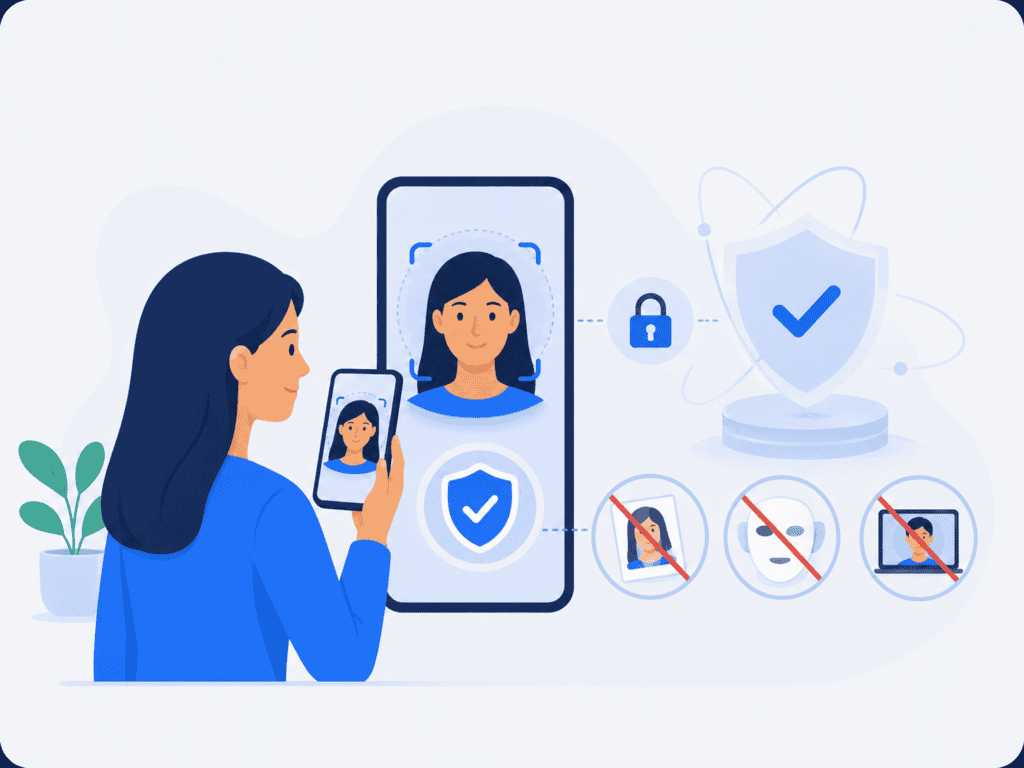
It should minimise stored biometric data
The safest biometric image is the one you do not keep unless you truly need it. Systems should avoid storing raw face, fingerprint, or palm images by default when a template or privacy-preserving token can support the use case.
Ask vendors what is stored, where it is stored, how long it is retained, and whether raw images ever leave the user’s device.
It should process sensitive checks close to the user
On-device processing can reduce the amount of biometric data sent to servers. This is useful for privacy and speed, especially in login or re-authentication flows where the system only needs to confirm that the enrolled person is present.
It can also reduce the blast radius of a server-side breach. If the central system does not hold raw biometric images, there is less sensitive material for an attacker to steal.
It should include liveness detection
Any face or selfie-based biometric ID workflow should include presentation attack detection. Without liveness, the system may be comparing a stored reference against a spoof.
The question is not “Does the image match?” The better question is “Is the right live person present, right now, for this action?”
It should separate authentication from surveillance
A privacy-preserving biometric ID system should be scoped to a clear user action, such as logging in, enrolling, recovering an account, or approving a transaction. It should not quietly become a broad identification or tracking system.
This is one reason 1:1 verification is often preferable to 1:N identification. The narrower design better matches the user’s expectation: “Verify me for my account,” not “Search me across a database.”
It should have a fallback path
No biometric method works perfectly for every person in every condition. Users may have disabilities, device limitations, changed appearance, injured fingers, camera issues, or environmental constraints.
A well-designed biometric ID system includes fallback and recovery methods that are secure but not punitive. Otherwise, the system may reduce fraud while accidentally locking out legitimate users.
Conclusion
A biometric ID is not just a face scan or fingerprint. It is a way to connect a real person to a trusted identity, then verify that person when it matters. The strongest systems combine biometric matching with liveness detection, privacy-first storage, clear user consent, and fallback paths for real-world edge cases.
FAQs
What is biometric identification?
Biometric identification is the process of recognising a person using biological or behavioural traits, such as a face, fingerprint, iris, palm, voice, or typing pattern. In strict terms, identification often means searching one person against many records, while verification means checking one person against one claimed identity.
What is the difference between biometric ID and biometric authentication?
Biometric ID refers to the identity system or credential that connects a person to a biometric trait. Biometric authentication is the act of using that trait to confirm the person during login, access, recovery, or approval.
Is a biometric identity card the same as a biometric ID?
A biometric identity card is one form of biometric ID. It is usually a physical credential that contains or references biometric information. A biometric ID can also be fully digital, account-based, device-bound, or part of a passwordless login flow.
What does a biometric ID document store?
A biometric ID document may store a facial image, fingerprint data, iris data, digital signature, or biometric template, depending on the document type and issuing authority. Some modern systems avoid storing raw biometric images centrally and instead use templates, cryptographic protections, or device-based verification.
Can biometric IDs be hacked?
Any identity system can be attacked, but the risk depends heavily on design. Biometric systems are safer when they use liveness detection, privacy-preserving templates, encryption, on-device processing, limited retention, and strong recovery controls.
Why are biometric IDs replacing traditional IDs?
Traditional IDs depend on possession and visual inspection. Biometric IDs add a live-person signal, which is harder to borrow, forget, or phish. This makes them useful for remote onboarding, passwordless login, account recovery, and high-risk approvals.
Are biometric IDs good for privacy?
They can be, but only when the system is designed around data minimisation, consent, limited use, and secure storage. A biometric ID system that stores unnecessary raw images or uses broad identification without clear user action creates avoidable privacy risk.