
 Back
Back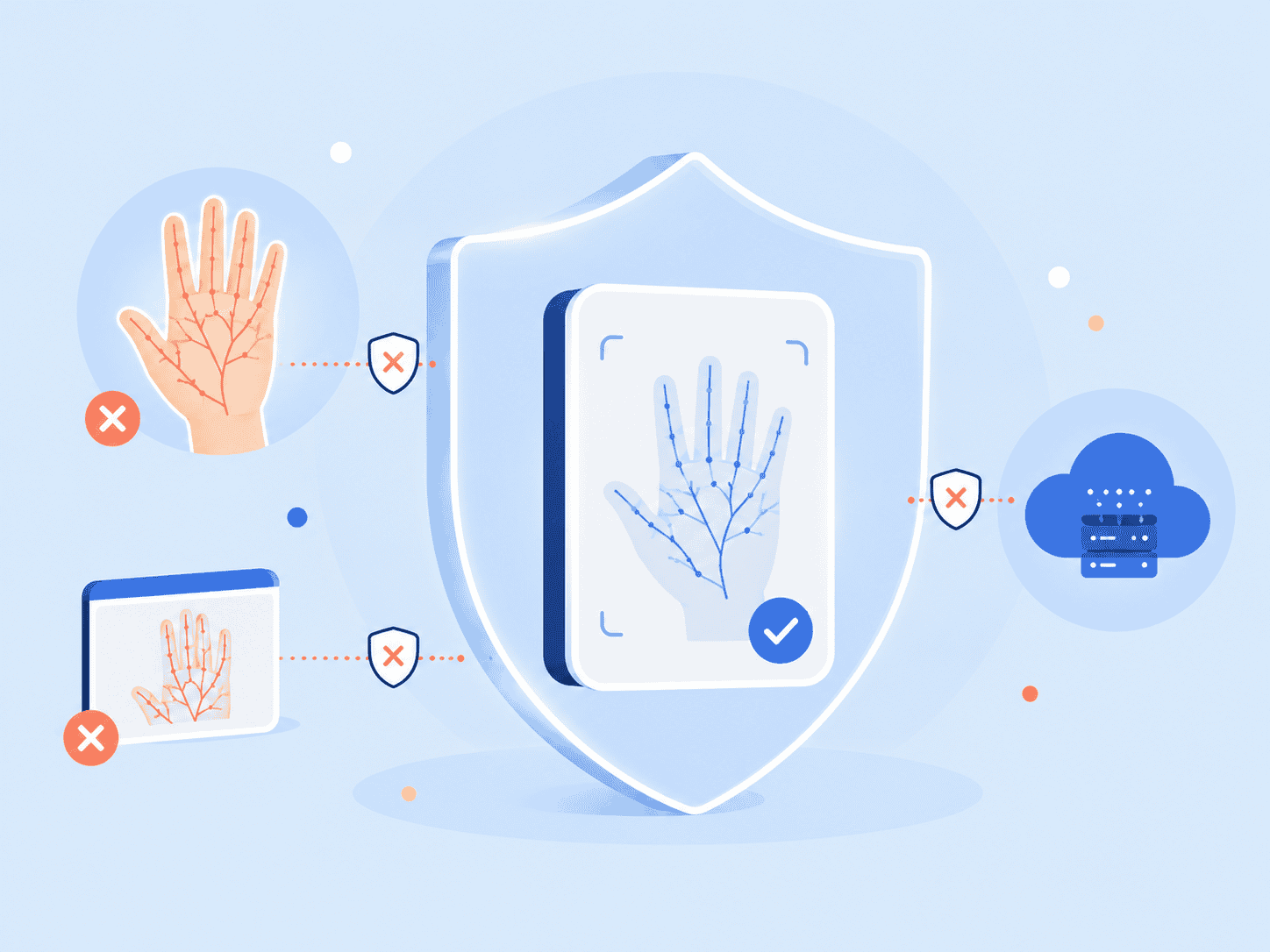
Security is evolving rapidly, and so are our methods of verifying identity. As technology shifts towards more touchless solutions, organizations across industries seek robust yet seamless ways to protect users without sacrificing convenience. Enter palm biometrics, an advanced form of contactless authentication that’s already transforming banking, payments, healthcare, and more.
Palm vein scanning takes biometric verification to the next level, combining unique biometric markers with a frictionless, hygienic experience. Unlike more familiar fingerprint or facial recognition, palm biometrics offer unparalleled security and usability, tackling modern demands for speed, privacy, and inclusivity. Let’s explore why palm biometrics stand poised to become the gold standard for identity authentication, and how this remarkable technology is reshaping secure access in 2026.
Key Takeaways
- Palm biometrics provide highly secure, contactless authentication by scanning unique vein patterns beneath the skin, surpassing fingerprint and facial recognition in accuracy and privacy.
- Palm vein recognition uses near-infrared light to create a frictionless, hygienic identity verification experience that is resistant to spoofing and stable throughout a person’s life.
- This technology is rapidly transforming industries such as banking, payments, healthcare, and access control by enabling fast, passwordless authentication in real time.
- Integrating palm biometrics requires dedicated hardware or smartphone sensors, with flexible software solutions supporting smooth deployment across platforms.
- User privacy is prioritized through encrypted biometric templates, informed consent, and compliance with regulations like GDPR and CCPA, ensuring data protection and trust.
- While adoption faces challenges like cost and awareness, growing education, improved integration tools, and proven reliability are accelerating global uptake of palm biometric solutions.
What Is Palm Biometrics? Understanding the Technology
Palm biometrics use the unique physiological features within an individual’s palm for identification and authentication. The most advanced and widely deployed modality is palm vein recognition, which leverages the intricate vein patterns inside our palms. These patterns are virtually impossible to replicate or forge, making palm biometrics one of the most secure authentication methods available today.
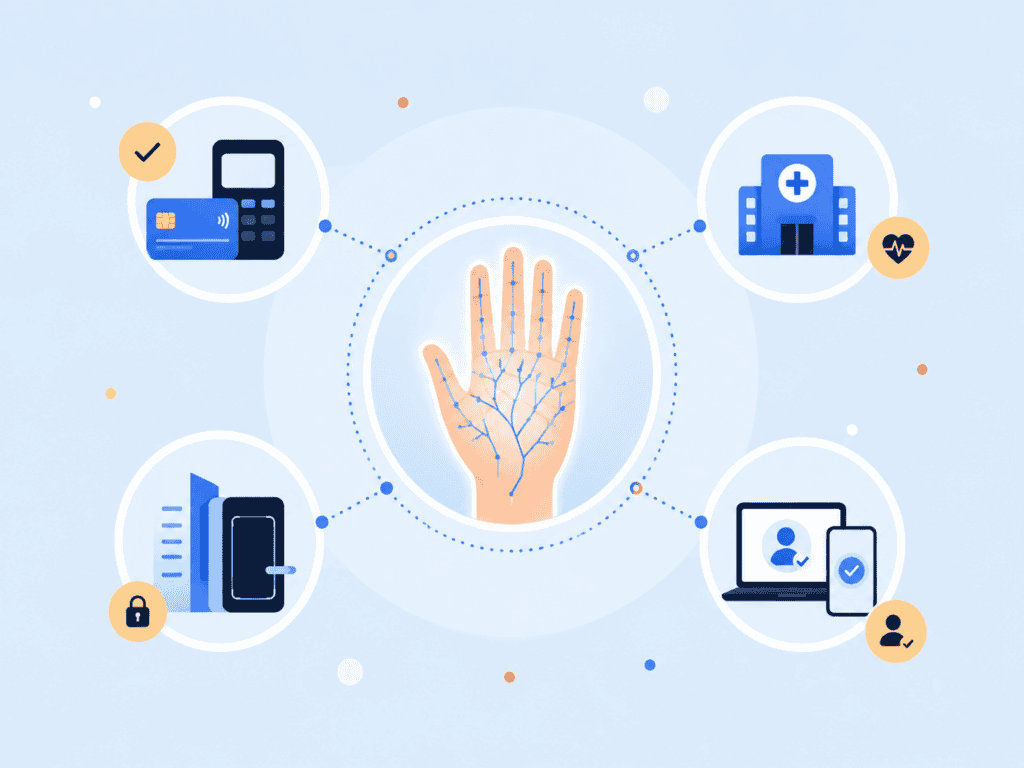
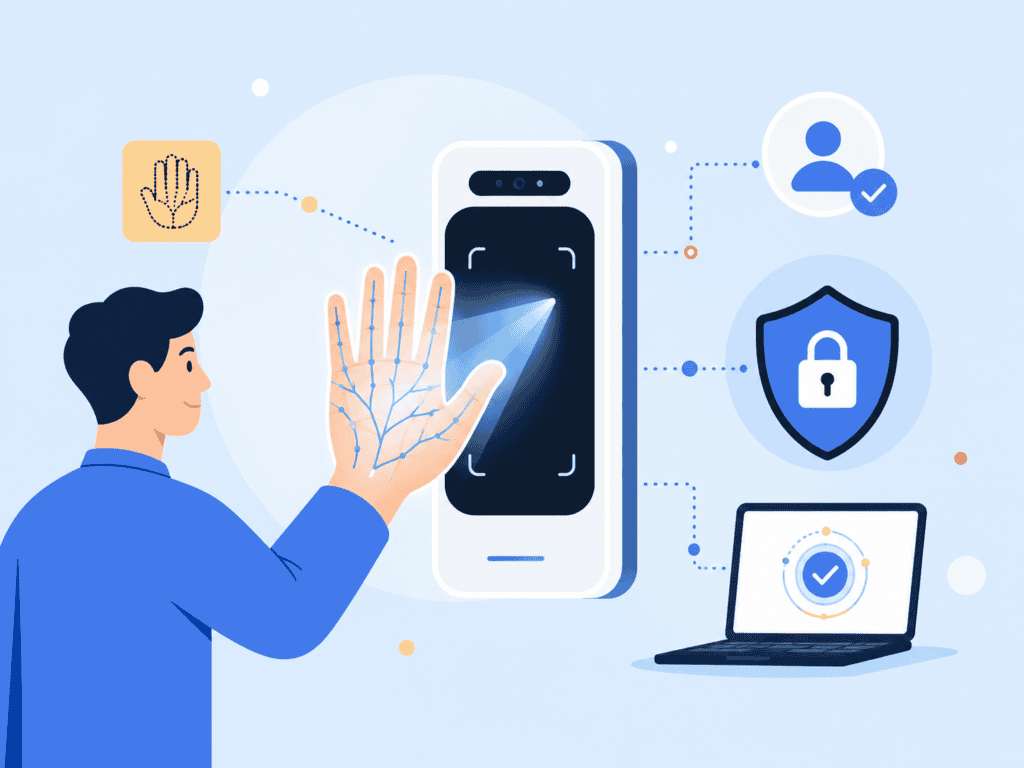
Unlike fingerprint or face recognition, palm scanners rely on near-infrared light to illuminate the vein pattern beneath your skin. The hemoglobin in your blood absorbs this light, revealing an intricate, one-of-a-kind map. This biometric data is captured using specialized sensors, it’s contactless, hygienic, and highly reliable.
What sets palm biometrics apart is that the patterns reside beneath the skin’s surface, significantly raising the bar against spoofing and deepfake attacks. Plus, because palm veins are stable throughout life, palm-based identification remains accurate for years, even as external features change.
How Palm Vein Recognition Works: The Science Behind the Scan
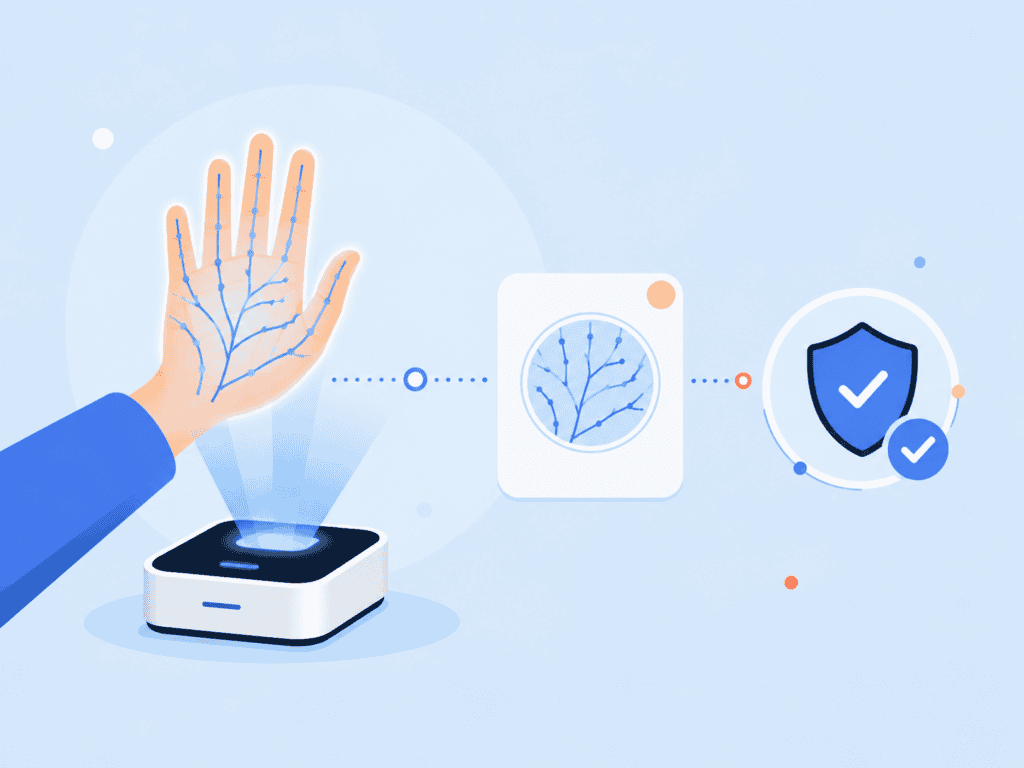
At the core of palm vein biometrics lies a remarkably precise science. Here’s how the process unfolds: As you hover your palm above a scanner or terminal, the device emits near-infrared light that penetrates your skin but is absorbed by deoxygenated hemoglobin in your veins. This creates a high-contrast image, highlighting your unique vein structure.
Step-by-Step Process
- Image Capture: The scanner’s built-in camera acquires a clear, contactless image of the palm’s internal vein network.
- Feature Extraction: Sophisticated algorithms analyze the vein pattern, converting it into a digital biometric template.
- Template Matching: When verifying identity, the system compares the newly acquired template against the stored template with extremely high accuracy, typically above 99.9%.
No two people share the same palm vein pattern, not even identical twins. Factors like skin tone, surface injuries, or external obstructions rarely affect performance, as the scan targets subsurface features. Industry leaders such as Fujitsu and Ingenico have pioneered commercial palm vein solutions, helping organizations achieve fast, accurate, and secure biometric verification at scale.
Palm Biometrics vs. Other Biometric Methods: Benefits and Limitations
Palm biometrics are earning praise for outperforming many traditional biometric modalities, but how do they really stack up?
Benefits
- Contactless Experience: Unlike fingerprint scanners, palm vein readers work without touch, promoting hygiene in high-traffic areas and reducing wear on hardware.
- Security: Internal vein patterns are invisible and nearly impossible to imitate, giving palm recognition a decisive advantage over fingerprint, facial, and even iris scanning.
- Universality: Nearly everyone can use palm biometric solutions, regardless of age, occupation, or skin condition. The scan works equally well across all skin tones, a limitation for some older facial recognition systems.
- Stability: Vein patterns remain consistent throughout life, ensuring long-term accuracy and minimal enrollment churn.
Limitations
- Hardware Needs: Deployment requires dedicated imaging hardware, which can be pricier than fingerprint sensors.
- Adoption Curve: Many users are still unfamiliar with palm biometrics, which may impact initial perceptions and uptake.
- Environmental Constraints: In rare cases, strong sunlight or moving hands can impact vein detection, though newer systems compensate effectively.
Overall, when considering secure authentication for scenarios that demand high accuracy and privacy, palm vein biometrics offer a compelling, future-ready solution.
Palm Verification and Identity Authentication: Processes and Accuracy
Palm biometric verification involves three seamless steps: enrollment, liveness detection, and matching. During enrollment, a user’s palm vein pattern is captured and converted to a secure, encrypted biometric template. This template is stored in a database or on the user’s device, following strict privacy standards.
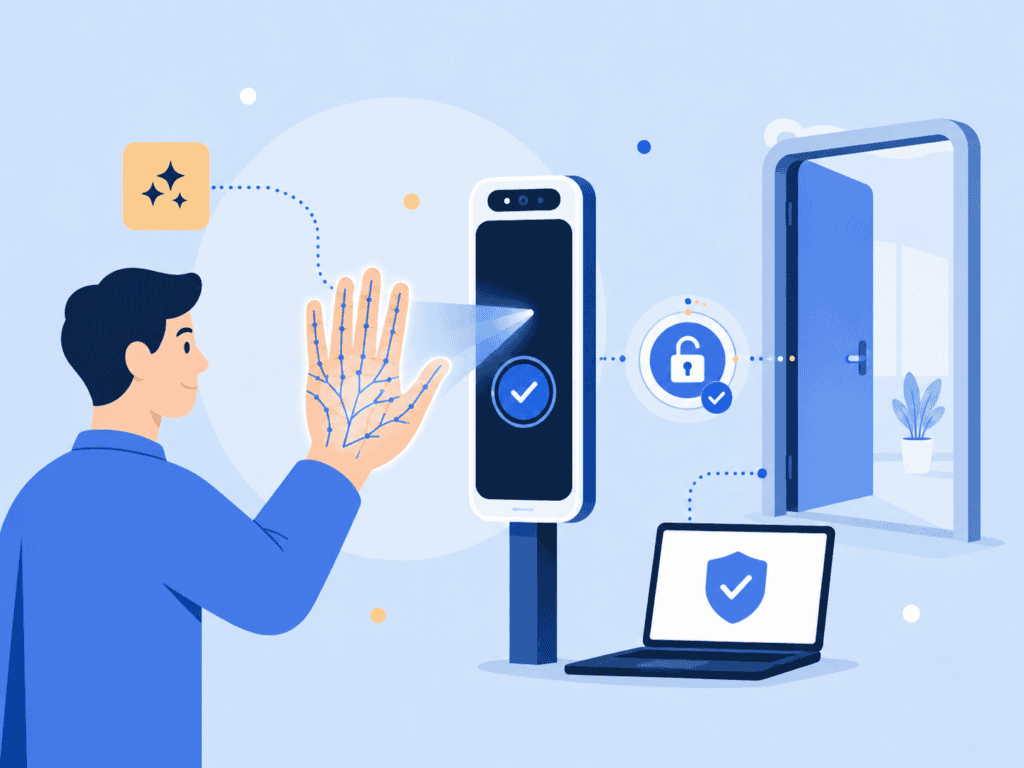
Whenever authentication is required, the palm is scanned anew, and advanced algorithms check for liveness, confirming the presence of flowing blood to thwart spoofing attempts. The system then compares the new scan to the enrolled template. If the match score surpasses a configured threshold, access or a transaction is approved in real time.
Performance Metrics
Contemporary palm biometric systems achieve false acceptance rates below 0.001% and false rejection rates under 0.01%, which is significantly better than many other options. Industry benchmarks reveal that palm verification offers higher accuracy than fingerprint or face recognition, especially in multi-factor authentication (MFA) scenarios and environments where reliability is mission-critical.
Applications of Palm Biometrics: From Banking to Payments
Palm biometrics are no longer a niche. Industries ranging from finance to healthcare are deploying palm-based authentication for both security and user convenience.
Where Palm Scanning Is Making Strides
- Banking and Finance: Leading banks use palm vein scanners for frictionless account login, cash withdrawals, and high-value transactions. Customers can check balances or approve wire transfers without passwords or cards, boosting security and experience.
- Retail and Payments: Palm payments allow shoppers to pay simply by hovering their hand, streamlining checkout. Platforms like Ingenico are integrating palm scanning technology into retail terminals, and major payment networks, including Visa, are piloting palm-based authentication for loyalty programs and seamless transactions.
- Healthcare: Quick, accurate patient identification reduces risk in hospitals and clinics. Palm vein ID solutions help prevent fraud, support medical record management, and ensure only authorized access to sensitive areas.
- Offices & Access Control: Secure login and entry replace outdated swipe cards, increasing security and automation in corporate, educational, and government environments.
Palm biometrics are also being adopted in transportation, event ticketing, and hospitality, offering a fast, touch-free way to authenticate identity that feels both modern and secure.
Integrating Palm Scanners: Hardware, Terminals, and Smartphones
Integration is a critical driver for palm biometric adoption. Today’s palm vein scanners come in multiple form factors, tailored for flexibility:
- Dedicated Terminals: Hardware units installed at bank counters, payment kiosks, and building entry points. These scanners incorporate infrared sensors, imaging cameras, and real-time processing units for instant, accurate matching.
- POS Devices: Modern point-of-sale terminals, like those from Ingenico, offer built-in palm scanning modules so users can authenticate or pay without cards or PINs.
- Smartphone Integration: The newest smartphones and tablets are being equipped with compact infrared sensors and software for palm vein capture, leveraging mobile device cameras for fast verification on the go.
For businesses, integration is streamlined through customizable SDKs, APIs, and cloud-based platforms that support rapid deployment and scaling. Existing authentication frameworks, whether for enterprise login or consumer payments, can add palm verification for an added layer of security without compromising the user experience.
User Experience and Security: Passwordless, Seamless, and Secure
The power of palm biometrics lies in blending robust security with frictionless usability. As users, we expect authentication to be both invisible and infallible.
A Truly Passwordless Experience
With palm scanning, remembering passwords or carrying tokens becomes a thing of the past. Users can log in, pay, or access restricted areas simply by hovering a palm above a terminal or device. The process is intuitive, there’s no need for contact, and authentication takes less than two seconds from start to finish.
Addressing Security Concerns
Palm biometrics use liveness detection to ensure that only real, living hands are recognized. This protects against spoofing, deepfakes, or attempted use of artificial replicas. Because vein data is internal and encrypted, privacy risks are minimized, and credentials can’t be observed or reused if intercepted.
Eventually, palm vein biometrics help close the gap between strong security and seamless modern convenience, providing peace of mind for both organizations and users.
Privacy, Consent, and Regulatory Compliance in Palm Biometric Systems
Any biometric solution must prioritize user privacy and regulatory compliance, and palm biometrics are no exception. As organizations roll out palm-based authentication, robust frameworks are required to manage consent, storage, and lawful use of biometric data.
Key Considerations
- Informed Consent: Clear, accessible consent mechanisms are needed, ensuring users understand how palm data will be captured, stored, and used. Opt-in must always be voluntary.
- Data Protection: Biometric templates are encrypted and either stored in secure cloud environments or, increasingly, directly on user devices. This keeps sensitive data outside central databases.
- Compliance: Regulations such as GDPR, CCPA, and growing national biometric laws require transparency, auditability, and rigorous breach notification policies. Providers must regularly update systems to comply with evolving requirements.
Organizations deploying palm biometrics should conduct risk assessments, maintain compliance documentation, and offer users easy recourse for data deletion or usage restrictions. Privacy-by-design is essential to build trust and drive widespread adoption.
Challenges and Adoption: Addressing Barriers and Driving Adoption
Even though clear advantages, palm biometrics face several adoption hurdles.
Barriers to Large-Scale Rollout
- Cost and Infrastructure: Dedicated palm vein hardware remains more expensive to produce than basic fingerprint or facial recognition solutions, although prices continue to fall as volumes increase.
- Awareness and Perception: Many end users are not familiar with the modality or may have misconceptions about how palm data will be used and protected.
- Integration Complexity: Implementing palm biometrics across diverse platforms, legacy banking, e-commerce, mobile apps, can pose technical challenges.
Overcoming the Hurdles
Education is key. Rolling out pilot programs, offering transparent privacy policies, and emphasizing hygiene and security benefits can improve awareness and acceptance. Investment in developer-friendly APIs and modular hardware is making integration faster and more affordable.
As global privacy regulations clarify standards and major players prove palm biometrics’ reliability at scale, we expect adoption rates to accelerate sharply in the coming years, making palm-based authentication a new norm for secure, contactless identification.
Conclusion
Palm biometrics represent a powerful step forward in secure, convenient authentication. By harnessing our unique vein patterns, we’re unlocking a future where access is fast, seamless, and nearly impossible to forge. As organizations continue integrating palm biometric verification into platforms across finance, retail, healthcare, and beyond, we anticipate palm scanning will set a new benchmark for digital trust in 2026 and beyond. The time to embrace next-generation, contactless biometric security is now.
Frequently Asked Questions about Palm Biometrics
What is palm biometrics and how does it work?
Palm biometrics uses unique vein patterns beneath the skin’s surface in an individual’s palm for secure identity authentication. Scanners use near-infrared light to capture these veins’ patterns, creating a digital biometric template for verification with over 99.9% accuracy.
How does palm biometrics compare to fingerprint or facial recognition?
Palm biometrics offers higher security because vein patterns are internal and nearly impossible to fake, unlike fingerprints or faces. It is contactless, hygienic, universal across skin tones, and remains stable over a lifetime, outperforming traditional biometric methods in accuracy and privacy.
What industries currently use palm vein recognition technology?
Banking, retail payments, healthcare, and office access control widely use palm biometrics for secure, convenient authentication. It enables passwordless login, contactless payments, patient identity verification, and secure facility entry, improving speed and security across these sectors.
Are palm biometrics secure against spoofing and privacy breaches?
Yes. Palm vein scanners include liveness detection to verify real, living hands and encrypt templates to prevent interception or reuse. Because vein patterns are internal, they resist spoofing and deepfake attacks, ensuring strong security and user privacy compliance.
What challenges affect the adoption of palm biometric systems?
Barriers include higher hardware costs, user unfamiliarity, and integration complexities with existing systems. Overcoming these requires education, transparent privacy policies, and investments in modular hardware and developer-friendly software tools to accelerate adoption.
Can palm biometrics be integrated with smartphones and payment terminals?
Absolutely. Modern palm biometric scanners come in various form factors, including integrated POS devices and smartphone sensors, allowing seamless authentication for payments, access, and identity verification on-the-go and at fixed terminals.