
 Back
Back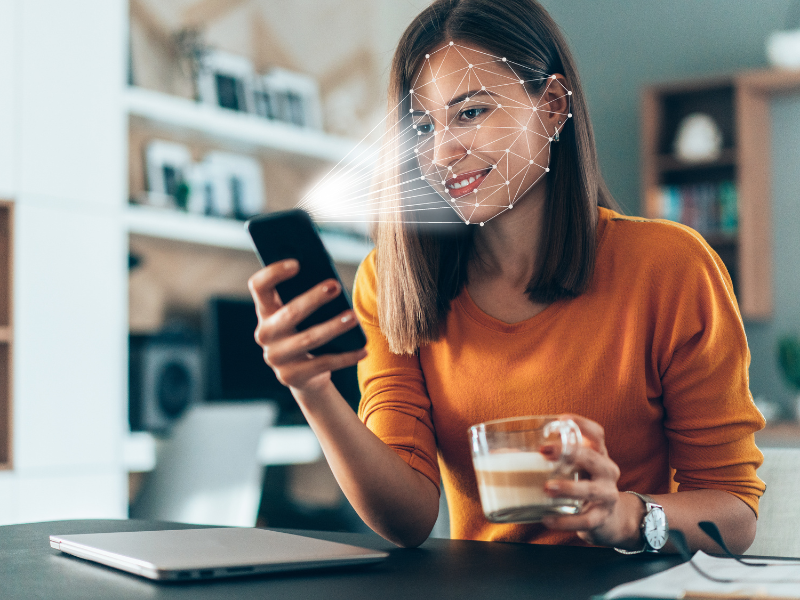
Few topics spark as much debate and demand as much attention as age verification in our increasingly digital world. Businesses of every size face the same challenge: keeping their platforms secure and compliant while still delivering a seamless, positive experience to users.
Age verification is not just a box to check for regulators. It is a responsibility to protect vulnerable groups, build trust, and maintain a company’s integrity. In this guide, we will explore what makes an age verification system effective, the most common methods in use today, the legal standards shaping the space, and how new technologies are changing the way companies protect both their users and their reputations.
Key Takeaways
- Age verification protects minors, builds trust, and maintains compliance with privacy laws worldwide.
- Reliable methods include knowledge-based checks, document verification, database matching, biometric scans, and manual reviews.
- The key to success lies in balancing privacy, accuracy, and user experience.
- Non-compliance can lead to regulatory fines, lawsuits, and reputational harm.
- Combining privacy-first technology with strong compliance practices ensures long-term business sustainability.

Understanding Age Verification
At its core, age verification is the process of confirming that an individual is old enough to access a specific product, service, or type of content. We see it across a wide range of industries—from e-commerce platforms and gaming sites to streaming services, online alcohol retailers, and even social media networks.
The goal is to make sure that only individuals of legal age can access restricted materials, while maintaining efficiency and user privacy.
In recent years, the expansion of digital services and the rapid pace of regulatory change have made this process more complex than ever. Businesses can no longer rely on simple age prompts or manual checks. They need systems that are secure, automated, and compliant across multiple jurisdictions.
Why Age Verification Matters
Protecting minors is the primary reason age verification exists, but it also serves broader goals. Companies that verify age responsibly show regulators, customers, and investors that they are proactive about safety and compliance.
There is also an important trust factor. Users expect that a company will not expose them to legal risk or misuse their data. Transparent, privacy-preserving verification builds confidence and strengthens the relationship between brand and user.
At the same time, compliance requirements are becoming more stringent. Laws in Europe, North America, and Australia are expanding, and penalties for violations are growing. A strong verification process protects both the public and the company’s long-term reputation.
Finally, the way age verification is handled can directly affect user retention. A process that is accurate but slow will frustrate users. A process that is fast but insecure will invite legal and ethical scrutiny. Businesses that strike the right balance can expand faster and serve more users safely.

Methods of Age Verification
There is no universal standard for verifying age. Each method offers advantages and trade-offs depending on the use case, level of risk, and regulatory environment.
Knowledge-Based Verification
This traditional approach asks users to answer personal questions—often pulled from public or private databases—to confirm their identity and age. While simple to implement, it is less secure today since much of that information is accessible online.
Document Verification
Users upload a government-issued ID, such as a driver’s license or passport. Advanced AI systems check for authenticity, look for tampering, and extract the relevant age information. This method is accurate but can feel invasive to users who do not want to share their ID data.
To address these privacy concerns, PrivateID’s document verification analyzes the document entirely on-device. The system extracts only what is needed to verify the date of birth—nothing is stored or transmitted. This on-device design provides the accuracy of AI-driven document checks without the privacy risks of cloud processing.
Database Verification
In this model, the system cross-references user data with trusted government or financial databases. It is fast, reliable, and invisible to the end user, but only where those databases exist and can be accessed legally.
Biometric Verification
Facial recognition and liveness detection are increasingly popular for verifying both identity and age. These systems can estimate a user’s age directly from a selfie, eliminating the need for document uploads.
PrivateID’s facial age estimation is one example of how this can be done securely. It performs the entire analysis on the user’s device and provides results in about 25 milliseconds. No image or personal data ever leaves the device, and the process meets the requirements of major privacy frameworks such as GDPR and CCPA. The speed and privacy advantages make it an ideal solution for industries that need real-time age checks without compliance overhead.
Manual Verification
For certain high-stakes or high-value transactions, human review is still used. While it remains the most accurate form of verification, it also slows down operations and increases cost. Many companies now combine automation with manual review only for exceptions.
Each of these approaches has its place. The best systems combine more than one method—achieving the reliability of automated checks and the flexibility of human oversight.
Challenges and Limitations
Even as technology improves, age verification presents ongoing challenges.
Privacy is the top concern. Users are more aware of how their data is collected and used. Any verification system that stores or transmits personal data risks regulatory scrutiny. On-device verification helps minimize that exposure and reassure users that their data remains in their control.
Accuracy is also crucial. Documents can be forged, databases can be outdated, and AI systems require regular tuning to reduce bias. PrivateID addresses this through models trained on ethically sourced synthetic data, ensuring fair results without collecting sensitive personal information.
User experience can make or break adoption. Long verification processes often lead to abandonment. Instant, one-step verification is essential for conversion rates, especially on mobile.
Finally, regulatory compliance is an evolving challenge. New age-related laws are emerging in Europe, Asia, and North America. To remain compliant, organizations need systems that can adapt automatically to different regional requirements without rebuilding their verification flow each time.

Legal and Regulatory Requirements
The legal landscape for age verification varies widely, but one principle remains consistent: companies are responsible for knowing who can access their services.
In the UK, online gambling and certain entertainment platforms must complete Know Your Customer and age checks before a user can participate. In the United States, state-by-state regulations govern age verification for products like alcohol, cannabis, and tobacco.
Data privacy laws such as the EU’s General Data Protection Regulation (GDPR), California’s Consumer Privacy Act (CCPA), and the Children’s Online Privacy Protection Act (COPPA) define strict limits on how companies can store or share user information.
Solutions that minimize or eliminate data retention are the safest option. PrivateID’s on-device architecture, for example, keeps biometric and document data on the user’s hardware, eliminating the need for storage or transfer. This design inherently satisfies privacy-by-design standards and removes the need for additional consent forms.
For readers who want a deeper look into how privacy and security differ conceptually, visit Privacy vs Security.
Best Practices for Implementation
A successful age verification program requires more than choosing a technology vendor. It requires thoughtful design that aligns security, privacy, and user experience.
- Layer verification methods. Combine automated and manual checks to balance speed with accuracy.
- Minimize data collection. Gather only what is needed for compliance and remove it immediately after verification.
- Stay flexible. Update processes frequently to keep pace with evolving privacy laws and technical standards.
- Simplify the user journey. Reduce friction with short, clearly explained verification steps.
- Work with certified providers. Choose partners who hold third-party certifications and can prove compliance through audits.
PrivateID’s modular design supports this layered approach. Its liveness detection and identity proofing modules can be integrated into any digital platform. Each operates on-device to maintain privacy while delivering sub-second verification speed.
Conclusion
Age verification sits at the intersection of technology, compliance, and social responsibility. As regulations expand and public expectations rise, businesses need solutions that protect both users and data integrity.
By using on-device, privacy-preserving technologies, companies can verify age instantly, stay compliant with global standards, and maintain user trust. The next generation of age verification will be defined not just by accuracy and security, but by transparency and respect for privacy.
What is age verification and why is it necessary?
It confirms that a user meets the legal age requirement before accessing restricted products or services. It protects minors and keeps businesses compliant.
What are the main verification methods?
Knowledge-based checks, document uploads, database matching, biometric scans, and manual reviews are all widely used.
How does verification affect user experience?
Complex or slow systems increase drop-off. Real-time, on-device methods maintain privacy and convenience.
Which regulations apply?
Major frameworks include GDPR, CCPA, and COPPA. Industry-specific laws like gambling and tobacco restrictions add further requirements.
How can companies protect user data?
Use privacy-by-design tools that process data locally, never store images, and delete temporary data after verification.